Mar 032010

I’ve blogged before about this great organization, spearheaded by Sylla Sheppard-Hanger and now joined by the dedicated Geraldine Zelinsky.  I’ve known both of these remarkable ladies for over 15 years now.  How time flies when you’re working hard and having fun.

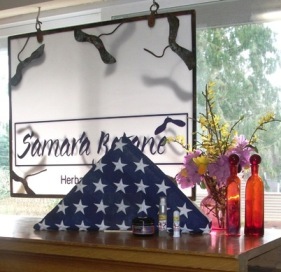
Flag_SBProds_2010_280 For those of you who aren’t familiar with UAE, here is their mission, “The United Aromatherapy Effort, (UAE) is a 501(c)(3) non-profit Charitable organization born out of the September 11th tragedy. The mission of UAE is to provide stress relief and aromatherapy to relief workers, and troops during emergency work and afterwards. We collect and disseminate donated aromatherapy products to those affected by disaster or war  in conjunction with chair massage and other natural therapies. Historically we have responded to the World Trade Center Disaster, NY (2001), Florida Hurricanes (2004), the Gulf Coast affected by hurricanes Katrina and Rita (2005-6), and in 2007-8 the California wildfires and the Gulf Coast Hurricanes Gustav and Ike. Recently in 2009 we shifted our focus to the Military, both abroad and at home and are now supplying 4 Soldiers on the Ground (Afghanistan and Korea) with donated aromatherapy supplies they then disseminate to other soldiers.”

Since the beginning, Samara Botane has been happy to be donating diffusers, essential oils and aromatherapy products to bring stress relief,  help with minor skin problems and aromatic uplifting to those brave persons who serve so valiantly in times of emergency and disaster through this heartfelt organization.  Starting last year, UAE began working with troops in the field in Afghanistan and N. Korea.  A lovely thank you from troops outside Kabul at Camp Phoenix was the flying of the American flag on the base in honor of UAE last December 21. The flag was carefully removed, folded and sent to Sylla along with a letter from Brigadier General, Lawrence E. Dudney, Jr. expressing the gratitude of the troops.  The flag has now been travelling across the country from company to company while we all take pictures of it in our shops and warehouses.  Ultimately, Sylla and Geraldine will make a collage of the photos to send back to Brigadier General Dudney, Jr. to share with the troops. 

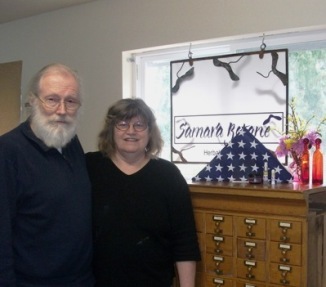
Mar_Rob_Flag_2010_325 As we did this, from opening the package with the flag to carefully replacing it securely to ship on to the next UAE company supporter, it has been an emotional time. We feel pride well up in our throats, as well as apprehension for the safety of our troops in our hearts.  We hope that we are doing some small thing for those who do so much, and it’s nice to know their appreciation.  We certainly appreciate them.

Rob and I took these casual pictures on the fly over the weekend, while squeezing a short break from taking inventory working with a temporary professional crew. I wanted to have our great staff in the pictures, but the timing didn’t work out and they weren’t here.  We are in our ‘blending room’ where staff fills thousands of those little bottles of essential oils and I work to formulate new blends for products when I’m not in the office on the computer or planting and tending the gardens.  The sign in the window is from our first store in Seattle, with the original Samara Botane logo and hand wrought copper samaras; a nice reminder, a glimpse of the evolution of our journey every time we look out that particular window.

I know these are tough economic times for many of our clients and customers.  UAE can always use money for postage and shipping, even in small amounts if you can spare it.  I’m sure they would appreciate hearing from you. 

Feb 252010

In the aromatherapy products community, safety is by far the most discussed topic. We spend hours in online discussion groups, social media outlets, on our websites and in our blogs in an effort to convey accurate and safe advice to those using essential oils and ancillary products.  Let us be very clear.  We at Samara Botane want safe aromatherapy products that carry no or minimal risk to consumers. 

Several years ago, many of our colleagues in the small personal care products industry joined with us as enthusiastic signers to the Campaign For Safe Cosmetics. Sounded good and what looked to be a way to carry a larger message about personal products safety. We trusted that CFSC would represent an honest, peer-reviewed scientifically verifiable position. A closer review now indicates that many of their references reflect insufficient data, some reflect low hazard and yet they include these substances in a larger list of potentially toxic ingredients. Additionally, we assumed and trusted that, as signers, our interests would be taken into consideration for any actions bearing our signatures as supporters.  When the FDA introduced the FDA Globalization Act of 2008, it appeared as if CFSC was pressing for stringent, and perhaps unnecessary, regulations to be included in the act requiring product registration fees that would be prohibitive for many of the CFSC small business signers. At that time, it also began to become apparent that perhaps an overzealous rush headlong was overstating the immediate necessity for some of the requirements suggested to be included in the act and that perhaps established authorities were not being consulted to provide scientific documentation that would anchor CFSC’s position with actual facts and tempered scientific reasoning. There was an attempt to discuss our concerns with the leaders at CFSC, however, after several months we at Samara Botane requested we be removed as a signer when they were nonresponsive to our inquiries. It took over 2 months for them to comply with our wishes to have our name removed.  We were not alone.  Other small business colleagues did likewise and express similar stories.

Donna Maria Coles Johnson, President/CEO Indie Beauty Network, spearheaded a movement to insure member voices were heard at the FDA and she attempted to also dialog with CFSC.  She and several IBN members travelled to Washington, D.C. on two occasions to meet with the Congressional Committee working on the FDA Globalization Act.  The act has now been shelved, however, it could become active again. Donna Maria was diligent to communicate with and solicit input from IBN members throughout this process, gaining broad support from the membership.  Here are some of  her reports during this part of our story: 
Why I Oppose New Cosmetics Laws That Do Not Contain Exemptions For Small Businesses
Why I’m Headed Back To Capitol Hill On Behalf Of America’s Small Businesses
Campaign For Safe Cosmetics: A New Report

It appears as if CFSC is now determined to press for these cosmetic ingredient requirements without consideration for small business exemption or insuring that other concerns are first addressed. They are now taking their efforts to the states themselves. As an endorsing organization of the CFSC, the Women’s Lobby of Colorado, is supporting state senator Boyd’s and representative Primavera’s HB 1248 The Colorado Safe Personal Care Products Act. CFSC is prominently featured on relative Women’s Lobby documents.  Based on Samara Botane’s experience with the nonresponsiveness of CFSC, and their failure to adequately advise signers  we wonder if the 36 small Colorado companies listed here have expressly authorized CFSC or the Women’s Lobby to use their names on this document, which intimates support of the act. We wonder if they are even aware of the act or the broader implications of the CFSC agenda that could impact their small business. Additionally, we do not know where the Women’s Lobby is gathering their facts, but their fact sheet is not entirely accurate.  Washington state has NOT passed a similar law as stated.  House Bill 2166 was introduced in the Washington legislature and referred to committee in 2007 and no further action has been taken.  There is not an existing similar law in Washington state.

We at Samara Botane encourage all small personal care businesses who either reside in or do business in Colorado to contact the legislators to oppose this bill.  Please read these blogposts from colleagues with additional details, concerns and cautions:
Oppose the Colorado Safe Personal Care Products Act Donna Maria Coles Johnson, IBN
Colorado Safe Personal Care Products Act :: Take Action Immediately, Kayla Fioravanti, Essential Wholesale
Colorado Safe Personal Care Products Act Kelly Bloom, Southern Soapers 
Tunnel Vision, Robert Tisserand, Aromatherapy Expert and Author
Colorado Safe Cosmetics Bill, Cindy Jones PhD, Sagescript Institute
The Colorado Safe Personal Care Act: How Will it Affect You, Lisa Rodgers, Cactus & Ivy
You Can Die From Salt, Too, Anne Marie Faiola, Bramble Berry
Oppose Colorado Safe Personal Care Products Act, Katherine Corkill, Sterling Minerals
From the President – Colorado Safe Personal Care Products Act, Leigh O’Donnell, HSMG
Colorado versus the cosmetics industry, Sarva Natural Artisan Soaps
When Safety in Personal Care, Isn’t Safety At All, Jerell Klaver, Salus Natural Body Care
The Colorado No Product Law, Marge Clark, Nature’s Gift
Tilting at Windmills: The Colorado Safe Personal Care Products Act, Emily Topsham, GCD Spa
Costly Confusion in Colorado: The Bubble Bill, Donna Maria Coles Johnson, IBN

Oppose the Colorado Safe Personal Care Products Act, Aromatalk
House Bill 1248 Colorado Safe Personal Care Products Act., MK Independent Beauty Consultants, We Will Not Fall Blog

Related Articles:
Colorado Proposes Ban on Cosmetics It Claims Cause Cancer, Cosmetic Design
Bill Proposes the Colorado Safe Personal Care Products Act, Global Cosmetic Industry

Tell Colorado Legislators to Back off the Mary Kay Lady: Oppose HB 1248, Ben, Peoples Press Collective

We hope we have included all to date, please add additional blogs or articles in your comments so that we can continue to assemble a comprehensive list.  Thank you.

Marcia Elston and Rob Stitt
Samara Botane/Nature Intelligence

Jan 152010

I put my arms around him yes
and drew him down to me so he could
feel my breasts all perfume yes
and his heart was going like mad
and yes I said yes I will Yes.
James Joyce

According to the New Advent Encyclopedia Section, there were at least three different Saint Valentines, all of them martyrs. One is described as a priest, another as a bishop and the third suffered in Africa with a number of companions, although nothing further is known. The popular, and now modern, customs associated with Saint Valentine’s Day have their origins in conventional belief in the geographical regions of England and France during the Middle Ages. This belief stems from the observation that half way through the second month of the year, the birds began to pair. 
Thus, in Chaucer’s Parliment of Foules,
"For this was sent on Seynt Valentyne’s Day
Whan every foul cometh ther to choose his mate."

For this reason, the day was looked upon as specially consecrated to lovers and the proper occasion for writing love letters and sending tokens to one’s object of affection. The French and English literatures are rife with allusions to the practice in the fourteenth and fifteenth centuries. Those who chose each other under these circumstances called each other their Valentines.

One romantic legend, according to History.com contends that Valentine was a priest who served during the third century in Rome. Emperor Claudius II believed that single men made better soldiers and outlawed marriage for young men. Valentine defied Claudius after realizing the injustice of the decree and continued to perform marriages for young lovers in secret. When discovered, Claudius ordered that he be put to death.

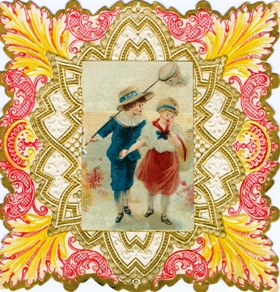
The oldest valentine in existence is thought to be a poem written by Charles, Duke of Orleans to his wife while he was imprisoned in the tower of London in 1415. Valentine greetings and tokens of affection were popular as far back as the Middle Ages, although written valentines didn’t appear until after 1400. The first commercial valentine in the United States is attributed to Esther A. Howland who made elaborate creations with lace, ribbons and colorful pictures, known as ’scrap’.  The scanned image at right is one of several elaborate, lacy valentines belonging to my long deceased great grandmother.

A typical verse:
"I send you this, with hope and fear
With hope that you will tender be;
Yet all the while, I tremble dear,
Lest you should not be fancy-free
I could not bear the hopeless fate
To hear the cruel words – too late.

Would that we could have such tender Romeos today to bare these fragile inner feelings and show such deep emotional love. Certainly not in this age of Grand Theft Auto: San Andreas and Resident Evil 4.

In Roman mythology, Cupid (meaning ‘desire’) is the god of erotic love and beauty, aka Amor, and son of goddess Venus and god Mercury. We have exploited this young deity in art, literature, confection, adornment and perfume at this time of year, some would say to excess. And, while we moderns are probably not going to participate in the elaborate ancient celebration of Lupercalia, which occurred in ancient Rome on February 15, and when some of the weirdest customs were indulged, it is perhaps another precursor to our modern celebratory immersion in romance and fertility.

Those of us who garden in the northern climes can’t ignore the fact that February 14 is also the approximate time for the beginning of the Spring thaw, another significant allusion to fertility.

While we may never know all of the facts of the history that lies behind Valentines Day; most of us are smitten with the idea of heartfelt expression and indulgence to bestow favor and admiration on those we care deeply about or wish to have a romantic relationship with.

Any expression of universal love in light of the overwhelming humanitarian disaster in Haiti must include our commitment to the brave and beautiful people of that impoverished country.  During the first quarter of 2010, Samara Botane will donate 10% of all all sales (not just web sales) to Partners in Health.  PIH works to bring modern medical care to poor communities in nine countries around the world. Their work has three goals: to care for patients, to alleviate the root causes of disease in their communities, and to share lessons learned around the world. Partners in Health has been in Haiti for over 20 years and its hospitals are untouched by the recent earthquake. They have been the first medical response to the disaster and their doctors and medical personnel are primarily Haitian citizens. Based in Boston, PIH employs more than 11,000 people worldwide, including doctors, nurses and community health workers. The vast majority of PIH staff are local nationals based in the communities we serve.

Valentine Gift Suggestions

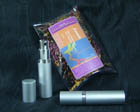
Amoretto™ Parfum Mist, 7.5 ml in brushed silver atomizer

Soft florals of Rose Otto and Ylang Ylang with hints of zesty Citrus, grounded with Vetiver & Sandalwood and a mere whisper of Black Pepper, Clary Sage and Juniper make this a lovely fragrant poem of innocent love. This fine perfume is a 30% perfume composition in certified organic perfumers alcohol, with moderate silage and a uniquely soft, sweet scent for young and old alike. Festively packaged in chic acetate pillow with sizzle fill.

Relax in the tub and treat your skin to nourishment and renewal

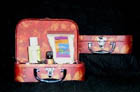
Renew Milk & Honey Bath Ensemble

The additive dissolves in your bath to create a beautiful skin softening therapy – a few drops of the essential oil blend make it aromatically restful while adding additional skin healing, and the aromatherapy body lotion completes the experience of skin rejuvenation and renewal. Packaged in a charming little reuseable suitcase. Delightful luxury for the love of your life.

Please explore our website for lovely naturally fragrant gifts and indulgences for your loved ones. If you have difficulty finding what you are looking for, or need some ideas or explanations, or want to put together a custom gift, you can always email or call me.

Free shipping to you or your recipient on orders placed before February 8th, with an additional bonus gift for the purchaser of one of our recipe booklets for refreshing skin, hair and body treatments and aromatherapy ideas for health and beauty.

Sending fragrant thoughts your way for this beautiful Valentine’s Day! Share your love abundantly with all you touch.

Marcia and the Samara Botane crew

Nov 192009

I thought we had cleared up this misconception years ago, however, it seems there are a number of essential oil purveyors claiming to carry essential oils  that are specifically certified as therapeutic grade by the FDA and show this seal below as proof.  Don’t be fooled.  They are not telling the truth.  In reverse order, this is one path to their deception.

 imageThis last trademark has been registered (as a word mark) by DoTERRA Holdings, LLC, 370 W. Center Street,  Orem, UT 84057.  Filed on March 4, 2009, published for opposition on July 1, 2009 and official registration granted on October 6, 2009.  This registration has the disclaimer, “No claim is made to the exclusive right to use ‘certified pure therapeutic grade’ apart from the mark as shown.

A third trademark has been registered (as a word mark) CPTG Certified Pure Therapeutic Grade also by DoTERRA Holdings, LLC, 370 W. Center Street,  Orem, UT 84057.  Filed on March 4, 2009, published for opposition on July 14, 2009 and official registration granted on September 29, 2009. This registration also has the disclaimer, “No claim is made to the exclusive right to use ‘certified pure therapeutic grade’ apart from the mark as shown”. There is a long list of products shown to be associated with this word mark.

A second trademark has been registered (as a word mark) CPTG also by DoTERRA Holdings, LLC, 370 W. Center Street,  Orem, UT 84057.  Filed on March 31, 2008, published for opposition on June 10, 2008 and official registration granted on May 9, 2009.

image A first trademark has been registered (as a word mark) CPTG also by DoTERRA Holdings, LLC, 1145 South 800 East, Ste. 134,  Orem, UT 84057.  Filed on March 31, 2008, published for opposition on June 10, 2008 and official registration granted on May 9, 2009. Under the trademark registration, they show application to the following products: Essential oils; Essential oils for household use; Essential oils for personal use; Lavender oil; Massage oil; Massage oils; Natural essential oils; Aromatherapy oils; Bath oils; Body oils; Cosmetic oils; Cosmetic oils for the epidermis; Essential oils for flavoring beverages; Essential oils for food flavorings; Essential oils for use in manufacturing of gelcaps and other dietary supplements; Essential oils for use in the manufacture of scented products; Oils for cleaning purposes; Oils for toiletry purposes; Skin and body topical lotions, creams and oils for cosmetic use; Food flavorings prepared from essential oils; Oils for perfumes and scents; Peppermint oil; Perfume oils; Tanning oils.

DoTERRA, LLC is yet another multi-level marketing natural products company based in Utah who has applied through the U.S. Patent Office to “own” (exclusive use) a registered word mark.  This registered word mark has not been provided to them by the FDA as they claim and is meaningless in proving that an outside certifying body has declared or designated that DoTERRA’s essential oils are certified pure therapeutic grade.  DoTERRA, LLC owns the right to exclusive use of the mark (however not the exclusive right to the actual words “Certified Pure Therapeutic Grade” which is revealing)  This seal or word mark is nothing more than a commercial trademark that they have registered and paid a fee for.  However, DoTERRA is purposefully misinforming potential customers and down liners by email by claiming FDA approval and that the FDA has provided them with the label that they, themselves registered and own.  The FDA does NOT certify the quality of essential oils by therapeutic grade and they do not provide a certifying label as claimed.  Following is an email from DoTERRA sent to a potential customer:

———- Forwarded message ———-
From: d?TERRA Member Service <service@doterra.com>
Date: Mon, Nov 16, 2009 at 5:01 PM
Subject:  
To: Recipient Name and Email Removed for Privacy

Dear Recipient Name Removed for Privacy,

We apologize if one of our consultants has mislead you in anyway (sic).  All of our oils are FDA approved as being Certified Pure Therapeutic Grade (CPTG). DoTERRA’s, CPTG essential oils are 100% pure natural aromatic compounds carefully extracted from plants.  They do not contain fillers or artificial ingredients that would dilute their active qualities and are free of contaminants such as pesticides or other chemical residues.  All of our products are taken through a series of tests including  AFNOR and ISO standards for purity, and all of our manufactures must maintain a GMP certification.  Therefore, we are passing government regulations.  The FDA has provided us with the label of CPTG. We hope we have resolved your concern.

Member Services
doTERRA International, LLC
370 West Center Street
Orem, Ut 84057
800-411-8151
service@doterra.com

Clearly this company is misleading people by claiming that they have a designation and approval provided to them by the FDA that in my expert opinion simply does not exist.  Stay tuned for part II of this series which will focus on FDA regulations that actually apply to essential oils and the part III will provide you with questions to ask a supplier that will ascertain their knowledge of essential oils and expertise in the industry.  

We at Samara Botane and many others in the essential oil trade have are dismayed about the misrepresentation of facts surrounding essential oils that occurs here in the United States, especially within the multi-level marketing industry.  We encourage people to diligently research any essential oil company before choosing them as a supplier.

Marcia Elston
Samara Botane/Nature Intelligence
http://www.wingedseed.com 

Please feel free to repost this entire message in its entirety, unedited, on your blog as well as social media outlets and newsgroups. 

Nov 062009

According to Goethe, the most evolved plants go through a transformation from the primitive germ to the exuberance of the flower in a natural movement toward spirituality where the flower, in its impermanence and openness, represents an instant of rapture and jubilation. No other floral fragrance compares to that of the precious rose, often inspiration for poetry, prose and tales of love and sorrow. The natural fragrance extracted from the rose has become the cornerstone for many signature perfumes since time began.

‘Rosa’ comes from the Greek ‘roden’, meaning ‘red’, as the ancient rose was thought to be crimson. Avicenna, the 10th century physician and chemist used the rose as his first distillation. Perhaps the first rose distillery existed in 1612 in Shiraz, Persia. Roses have a long history of use in celebrations. Rose petals have been scattered at weddings to insure a happy marriage. Also traditionally used in meditation and formal inaugurations.

It takes about 60,000 roses (approximately 180 lb.) to make one ounce of rose otto, and similar quantities are required for other extraction methods. If you consider that it takes about a dozen and a half roses to produce 1 drop of essential oil, you will have a greater appreciation of the preciousness.

Samara Botane has carried many different extractions of rose over the years.  Here are a few to choose from along with a few tidbits of information about each.

image Rugosa Rose, Ramanas Rose or Japanese Rose (Rosa rugosa) Native to Japan, China and Korea, the petals are used to flavor Chinese tea. The plant bears slightly purplish-pink flowers and is often cultivated for its enormous rose hips, which contain a high quantity of vitamin C. This rose is said to be "richly fragrant", having "one of the most delicious fragrances to be found among roses, and very strong".  Michael Shoup recommends, "plant it where you have access to its delicious fragrance or you will end up with a well worn path leading to it." We have two rugosa bushes on the property, one now towering at about 9 ft.  The other was planted later and is a little slow poke, only about 4 ft. in height and diameter. The essential oil of the flowers in our collection is obtained by hydro distillation. Using capillary GC-FID and GC-MS; 35 major constituents are identified, and include over 100 components including citronellal, geraniol, nerol, citronellyl acetate making up over 76% of the total. In Chinese medicine, both petals and roots are used. The fragrance of Rugosa Rose is more honeyed than Bulgarian otto with a peppery or spicy note in dry-down.

May Rose Absolute, Rose de Mai, Cabbage Rose or Provence Rose (Rosa centifolia var. Nabonnand or image Rosa centifolia L. var. Lunier) Macoboy writes, "the artists do not exaggerate its beauty, but they could hardly convey the wonderful sweetness of its perfume. Indeed it has for over a century been grown in the south of France to supply the perfume industry there with attar of roses," This rich Old Rose fragrance is extracted early in the Springtime, hence the name “May” Rose. Highly sought after in perfumery, it is rare to obtain outside that industry. Considered a superior odor amongst roses, concrete production now is less than ¾ ton, representing a 22% yield from the flower. This fragrance is a full rose with cinnamon-spicy undertone, with a fresh, herbaceous sweet-honeyed note. Most rose absolute is produced in Morocco in the valleys between the High Atlas and Jbel Sarhro mountains east of Marrakech. Rose absolute is a refined, liquid extraction of fragrant compounds from the fresh blossom. Although absolutes contain essential oil compounds they differ from distilled essential oils. An absolute is a refinement of a concrete, which is a thick, fragrant material extracted from the plant using a hydrocarbon solvent. The concrete contains essential oils, fatty acids and waxes. Absolutes are extracted from concretes with pure alcohol. The alcohol dissolves and absorbs the fragrant material from the concrete. Waxes, fats and other non-aromatic contents precipitate out and are removed by filtering. The alcohol is removed through evaporation. What’s left behind is the pure, fragrant absolute – a concentration of aromatic compounds including essential oil constituents.

imageBulgarian Rose Otto (Rosa damascena) Known as the finest rose essence or ‘otto’ in the world, Bulgarian damask rose oil has been distilled for over 300 years. The exact origins cannot be traced, however, there are fossil records that show roses have existed for millions of years. It is the oldest cultivated European plant in the United States, and has been called the Queen of Flowers all over the world. The uses of rose oil date back to the ancient civilizations of Persia, Asia, Greece, Rome and Egypt. It has been and still is a symbol of love and beauty. Rose otto is steam distilled and has a pale yellow color. Most rose otto is produced in southern Bulgaria from roses grown in the valleys of the Stryama and Tundzha rivers near Plovdiv. The best oil is distilled from newly opened flowers, picked in the cool morning hours before the sun has warmed away the aroma. In order to extract every trace of the precious oil, the distillation is done in two phases. An initial distillation yields a small quantity of concentrated green essential oil and a large amount of rose flower water. The flower water is then redistilled to produce an additional amount of pale yellow colored oil that is combined with the green oil from the first distillation. The primary base notes are deep, sweet and floral with spicy middle notes. It combines well with most other essential oils for perfumery or medicinal use. Its primary constituents are citronellol, gerianol and nerol. Although most Rose Otto is used in perfumery, the therapeutic uses include: Analgesic (pain reliever), Antibacterial, antidepressant, antifungal, anti-inflammatory, antiseptic, antiviral, aphrodisiac, cosmetic, deodorant, disinfectant, diuretic, emmenagogue (tones female reproductive organs and menstruation), Germicidal, hepatic sedative tonic, vulnerary (heals fresh cuts or wounds). Internal applications in the medical field include asthma, high blood pressure, bronchitis, poor circulation, diarrhea, dysmenorrhea (painful menstruation), cough, fever, fluid retention, Indigestion, insomnia, palpitation, stress, urinary tract infections. For topical applications, Rose otto is specific for abrasions, boils, burns, fragile capillaries, postnatal depression, dermatitis, eczema headache, insomnia, poor memory, rashes, sores, oral thrush and tinea.

image Rose Ruh Gulab (Rosa damascena ) Another precious oil from the flower of love & passion. This extremely rare and sacred rose oil is carefully hydro distilled to produce the finest Ruh Gulab for use in love, celebration or relationship spiritual work, meditative, healing & calming rituals, sacred products, or anointing. Ruh Gulab is the most expensive attar, priced higher than gold in weight. Rose essence or Gulab Ruh, is used in flavoring Gulab Jamun (a Bengali sweet) and rose sherbet. A mild, delicate fragrance of desi (Indian) roses can be sprinkled on guests from silver rose-water sprayers’ at weddings. In the traditional process various flowers, roots, herbs, spices, etc are hydro distilled in copper vessels into a receiving vessel, using an ancient process. This means that a certain proportion of flowers or other aromatic plants is put into a copper vessel containing water, sealed and the aromatic vapors produced from a wood or cow dung fire, rises through bamboo pipes and passes into another copper vessel, sitting below the larger distilling one. There the vapors condense and after the day’s distillation the water and oil separate. This process is similar to that of producing traditional attars with the exception that no sandalwood is added.

image Rose Gallica (Rosa gallica) is commonly called Gallic Rose, French Rose, Rose of Provins and Apothecary’s Rose.  In the 19th century it was the most important species of rose to be cultivated and most modern European rose cultivars have at least a small contribution from R. gallica in their ancestry. Botanical classifiers say that R. damascenas are created from a hybridization of R. gallica and R. phoenicia occurring in Asia Minor then distributing throughout Syria and the Near and Middle East. R. gallica is a deciduous shrub much like R. rugosa with pinnate leaves and flowers clustered up to four together.   When assessing the quality of the otto produced in central and southern Europe, it is sometimes described as a crude distillation, with a few twigs and leaves included in the process. This somewhat brash, sultry cousin to the more refined damascenes from Bulgaria or Turkey should not be overlooked as a respectable perfume ingredient and it has all of the same chemical constituents as R. damascena which makes it an economical choice for aromatherapy and massage.  One might accuse the snooty finishing school damascenes of dismissing their colorful cousin from SE Europe as irrelevant, however, upon closer examination she has an exciting, street savvy personality and sings her bawdy song quite sexily with her raspy voice, especially when combined with other florals to sweeten along with perhaps some citrus and wood bottom notes.  The affordable cost of Gallic Rose also makes it a beneficial addition to creams, lotions, toners, facial masques and a wide range of skincare and bath applications.

In addition to the aromatic delights one revels in when using any of the various ottos and absolutes made from rose petals, it is a joy to grow roses in the garden for bouquets, dried petals, potpourri and other crafts.  In the kitchen, rose petals can be added to a robust black tea for flavor or made into rose petal jam.  I suspect that if women were polled across the world to name their favorite flower, it would undoubtedly be the rose.  What are some of your favorite stories about the magnificent rose?  Please share them with us.