Marcia

President/CEO of Samara Botane/Nature Intelligence, importers of fine aromatic ingredients and manufacturers of natural spa and personal care products.


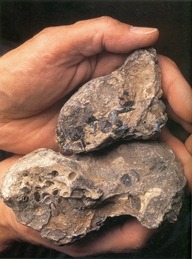
ambergris 192x259All natural aromatic substances that exist in Nature have a purpose other than to smell good in perfumes.  In the case of ambergris, it is produced in the stomach of the sperm whale, where it serves to protect the intestinal lining against the tough, horned snout of cuttlefish, a kind of squid that the whale swallows whole.  All very practical, as we most assuredly find in Nature.  While most teach that it is secreted as vomit, some argue that it also passes through the feces. Some, especially commercial, American perfumers usually avoid it because of legal ambiguities. It was banned from use in many countries in the 1970s, including the United States, because its precursor originates from the sperm whale, which is an endangered species.

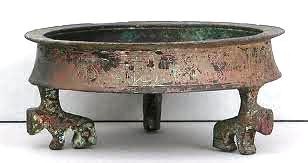
Historically, it was considered the second most treasured commodity to come from the sea, second to pearls.   After being excreted by the whale, it would be collected from the surface of the ocean near the islands of Sumatra, Molucca and Madagascar, and was referred to as “the gold of the ocean”.   The hardened shape, resembling fossilized lumps of amber (albeit grey in color), thus derived the name “grey amber” or ambergris.  It is a known fact that certainlate twelfth century incense burner 308x163 kinds of ambergris are known to float in the ocean for up to a hundred years. Ancient Egyptians burned ambergris as incense, while in modern Egypt ambergris is used for scenting cigarettes.

We humans have chosen to not fully embrace our own animalistic odor and instead we mask it with myriad smelly cover-ups.  Probably originating in hygiene and sexual modesty that ultimately fevered the Puritanical movement.   The enigma that we are drawn to smells that reflect our deeper centers of pleasure and love perfumes rich in products of animal origin (any animal other than human, that is) only confirms what complex and contradictory beings we are, especially when it comes to sexuality.  It is true that those perfumes with a ‘hidden’  pungency, unidentified intellectually in our awareness, are extremely popular.

Avery Gilbert challenges us to  stop randomly studying aromatic molecules in the laboratory and to “start observing odor fluency where it happens naturally.”  He reminds us that Charles Darwin was a “careful observer” and “attuned to smell”.  In Darwin’s words (speaking of the musk deer, another animalic odor): “On the banks of the Plata, I have perceived the whole air tainted with the odor of the male Cervus campestris, at the distance of half a mile to leeward of  a herd.”  Darwin recorded odors, along with other facts like species, place and time.  I mention this because I, like many of you, struggle with adequate descriptors for odors and Avery makes a perfect case for getting out in Nature herself as it might serve both perfumer and writer.  Since I, also, cannot disconnect my work with aromatics from the importance and joy of relating to unabashed Nature, I very much like the way he thinks in this regard.  

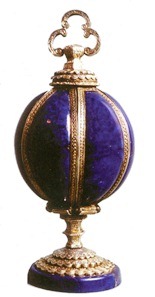
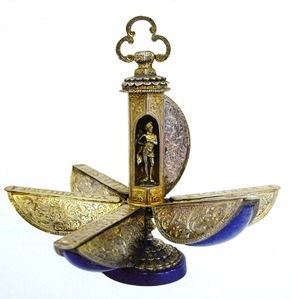
Pomade 155x297One of the earliest devices for enjoying aromatics in the fourteenth century actually derives its name from ambergris.  The ornately designed apple-shaped globe, sometimes decorated with gold and silver, with small individual sections held together with hinges was called a pomander, from the French pomme d’ ambre or apple of ambergris.  Originally, a simple, but pungent rolled ball of ambergris  would suffice, but art emergedpomade open 293x299 to house the scent, like this lovely ornamented creation pictured here.  The chambers were filled with scented paste and powder, using beeswax and other aromatics, each chamber sometimes housing a different odor.  Aristocrats of both sexes would carry these devices to occasionally sniff to ward off the malodorous smells of the street.  Larger ones were attached by a chain to the belt or worn around the neck and smaller ones, no larger than a thimble, were connected by a tiny chain to a finger ring.

During the Renaissance, the "girdle" (not to be confused with the modern-day "corset")The History of Jewellery was an important accessory made of leather, textile or flat metal chain that formed a belt-like strap worn diagonally along the waistline, draping from just above the hip on the right, downward to the left thigh. The girdle was typically accessorized with items like a purse, keys, knives, lockets, girdle books, decorative bangles, or a pomander.  The bangles or pendants (just as the pomanders themselves) could be bejeweled, enameled, or decorated with cameos, and were fastened to the girdle with equally decorative clasps. Of course, it was also one of those perfumed fallacies that the pomander would keep one from getting the plague.

The early gastronomer Brillat-Savarin created a recipe for ambergris-laced chocolate in 1826, perhaps for the tables of Casanova, Madame DuBarry and Madame de Pompadour. And, Nostradamus believed the chewing of lumps of ambergris could increase the production of seminal fluid.  Jean Paul Guerlain observed that ambergris “was to perfume creation what cream is to haute cuisine: an exquisite binding agent.” Since we find in history the use of ambergris as a spice in food, his observation is more than metaphorical. Musk and ambergris notes in perfume composition are of great significance and are a used in the composition to produce a sense of pleasure via ancient neural pathways without so much as a conscious thought as to the true nature of the stimulus.

Chinese pomander_181x285Since we are in the middle of celebrating the Chinese New Year, it is worth mentioning that the Chinese considered ambergris to be a potent aphrodisiac. The ancient Chinese called the substance "dragon’s spittle fragrance", lending yet another allusion to the current Chinese Year of the Dragon.  The early Chinese also used their version of pomanders like this small one pictured. 

In the eighteenth century, it was made into one of those “single-note” perfumes, like jasmine and neroli.

Styles and attitudes change and during the Restoration and into the later years encompassing the July Monarchy animalic scents fell into disfavor.   The more erotic scents began to be replaced with less controversial floral and herbaceous compositions.  Women became more worried about “being provocative”.   The newspaper Les Messager des odes et de l’industrie from 1853 identifies ambergris as “the primary perfume ingredient for women of easy virtue (cocettes) . . . and in the decade just preceding the Revolution, Mercier, the chronicler of social customs wrote that the decline of favorability for scented gloves was due to their “violent odor.”  Ultimately, strong animalic scents were banned and only worn by women of questionable morals. 

Septimus Piesse, the early nineteenth century chemist-perfumer, lamented that the scent of ambergris “clings pertinaciously to woven fabrics and is still found in the material after passing through the lavoratory ordeal” by which he no doubt means washing of clothes. I would argue that Piesse exaggerated somewhat and that one must always consider the final odor note in a composition after the melding of all others, as well as all other variables when evaluating the odor of an aromatic ingredient of natural origin.

In perfumery, it is the finest of all fixatives and will delay the volatility of other scented ingredients in a composition.  It is one of those perfume substances that sometimes draws revulsion when one learns of its origin, however, in the raw it actually has a relatively mild odor -  marine, slightly fecal, reminiscent of balsamic leather with a slight wet, sour aspect.  And, of course, we must keep in mind that odor can differ greatly from one batch to the next depending on the origin,  age and processing method to obtain a perfume ingredient.  

At Samara Botane, when we have the material available, we make a strong alcohol tincture using a Soxhlet extraction procedure which can then be diluted to the perfumer’s preference. This process produces ambrox and ambrinol, which are the main odor components of ambergris.  In perfumes, once married to other notes, ambergris becomes quite warm, earthy and velvety.  Some natural perfumers who wish to steer clear of animal ingredients,  appear to get an ambergris doppelganger by combining labdanum, olibanum and vanilla. 


Dia de los Muertos3The so called “Safe Cosmetics Act” has been rolled out again, with even more attendant shock and awe PR from the misguided zealots at the Campaign for Safe Cosmetics using misinformation on  Environmental Working Group’s Skin Deep Database.  If one were to rate the importance of this bill . . . what with a fragile economy in slow recovery, an unemployment rate stuck at over 9%, entire states in disarray (WI) or in near-complete shutdown (MN),  so many environmental catastrophes (Exxon-Mobil/Yellowstone River Spill) or near catastrophes (Las Alamos National Laboratory Site Fire), (Nebraska Nuclear Power Plant Missouri River Flood) . . . it logically would be of low priority. To me, there appears to be so much more urgency to address myriad larger problems facing the Nation, I sometimes feel like Atlas with that giant granite weight crushing any hope that used to glimmer that our elected leaders are going to stop their partisan bickering and get on with the business of governing and helping remedy the continuing effects of a massive economic recession.  I put the importance of HR 2359 at about a –minus –minus –minus ridiculous number.  I don’t know about you, but I would much prefer our lawmakers to be focusing their time and efforts on some of these macro issues desperately in need of their attention.  You know, like making sure our kids can go to school 5 days a week instead of the 3 or 4 now having to be imposed because of necessary budget cuts in many states.  Hello!  That’s surely going to help regain academic status in the world, isn’t it, and perhaps not possibly lose an entire generation to ignorance?  And you can be damned sure my colleagues and I have more important things to do than weed through a poorly written bill, obviously crafted by those with little or no knowledge in the multiple scientific disciplines necessary to understand the minutia of cosmetic formulation, and especially pertaining to essential oils and natural plant extracts – the very ingredients consumers most want in their natural personal care products.

Samara Botane/Nature Intelligence opposes Safe Cosmetic Act 2011 (HR 2359).  

As much as I and many other colleagues in the personal care, spa, herbal, natural perfume and aromatherapy industries may wish it weren’t so, we are once again faced with having to raise our small voices to defend the integrity of our professional pursuits to bring safe, effective personal care products into the marketplace . . . to avoid unnecessary, sometimes impossible regulations that are not going to make cosmetics any safer than they are now and only raise consumer prices because of the additional money, time and effort to comply.  

Never mind that, when this bill was first introduced in 2010,  we have previously pointed out that lead has not purposefully been added to lipstick by unscrupulous manufacturers gleefully twirling their mustaches, and that it naturally occurs as an element of the Earth’s surface and is in EVERYTHING in microscopic amounts, especially natural botanical ingredients.  It is in your water.  How many times must one state a FACT before it is understood and accepted?  This is still one of CFSC’s major talking points.  It has grown to epic proportions and wends its way into many lists of toxins to avoid, such as Green America’s 9 Toxins to Avoid in Personal Care Products, a document not referenced nor annotated with any scientific substantiation.  Those inclined to do more research on this matter would quickly find “Easily Led” a comprehensive thorough investigation of the claim (now urban legend), ending with the caveat, “The bottom line is that U.S. medical literature has yet to record a single case of anyone’s coming down with lead poisoning through lipstick use.” Of course, the CFSC has  trotted out “Lead in Lipstick” in an attempt to overstate the danger  in a desperate, somewhat hysterical hue and cry that microscopic levels of lead in lipstick at the highest tested 0.00000306 are of sufficient danger to browbeat our legislative representatives once again to put forth a bill that will never make its way through the process to become law, as it is now written.  All of this frenzied PR hype (rolled out by CFSC before the bill was even publicly announced) cannot counter “A Perspective on the Safety of Cosmetic Products: A Position Paper of The American Council on Science and Health”.   Nor can it counter the response from the Personal Care Products Council in 2010, nor their current response.  If you’d like pleasantly-presented, factual, scientific based information on cosmetic safety, PCPC has produced this series of short videos for the consumer. You can search this site for a specific ingredient or browse by product category. If you are looking for an easily-searched, more scientific database, try Toxipedia, where you will find no alarming leading questions like “Are you sure about your lotion?” or untrue statements like “Most sunscreens aren’t safe.” such as are found on EWG’s Skin Deep.  You will also not be subjected to a ineffective numerical rating system for product hazard, just scientific research and facts, no opinion . . . how refreshing.

Never mind that we have carefully critiqued and debunked Annie Leonard’s cleverly crafted propaganda video “The Story of Cosmetics” as the supreme shock and awe scare tactic hype it is.  Oh, but it’s cute, and cute appears to trump rational fact and common sense these days.  The sad thing is that the frenzied imagery of a masked assembly line worker purposefully inserting poison (international skull and cross bones = SCARY) into a cosmetic container, followed by the same skull and crossbones ruthlessly stamped on a baby (even more SCARY) in the bathtub does not seem to invigorate the critical thinking necessary to separate fact from overblown fiction.  And, this fictional video seems to incite, rather than inform those not capable of critically assessing information by comparing with credible reference and countering  professional opinion. How sad.

Examine the current FDA Authority Over Cosmetics and you will see it is comprehensive.  It is true that there are issues of concern to be addressed.  I believe the FDA will continue to do due diligence to insure the safety of cosmetic products.  I believe that the industry will be more than willing to assist this effort and comply with reasonable regulations.  HR 2359 is not the answer.  At this time when we have so many stressful  problems facing us, let us focus on what is urgent and necessary.

Please join me in opposing HR 2359 by signing the petition.


Photo:Courtesy
Mother Nature will tell stories at the Omni Center's "World Peace Wetland Prairie Earthday Celebration" Sunday, April 17 from 1 to 5 p.m. at the World Peace Wetland Prairie at 11th and S. Duncan in Fayetteville.My reflection on Earth Day last year wasn’t very rosy.  I’m not sure I have great news now that another one has rolled around.  This year, with the passing of Representative Paul Ryan’s 2012 Republican Budget Plan in the House of Representatives, clearly that side of the aisle is bent on slowing any progress towards addressing the coming calamity of climate change and protecting the environment. The bill includes a huge cut ($1.6 billion) in the Environmental Protection Agency budget and hits the Energy Department hard with harsh cuts to energy efficiency and renewable energy programs and doesn’t touch the approximate $4 billion in subsidies to oil and gas companies – the most profitable companies in the world.  I think this is wrong-headed. 

Rather than wallow in my disappointment thereby contributing to your own consternation that we are still slipping backwards on important environmental issues, I feel it’s more important to share a few positive ideas and actions.

earth_day_WA DCEarth Day Network has a plethora of activities, videos, campaigns and important information throughout the year. 

If you are in New York City, you might want to check out some of the events hosted by New York University during NYUEarthWeek from April 11 through April 28.  This Sunday, the fabulous Vandana Shiva will be featured at a luncheon. 

Kaboose has a wide range of activities for kids to keep them busy and exposed to environmental issues.

If you are a teacher, EdHelper provides a variety of printable Earth Day puzzles and activities.

And, how about a view of Earth courtesy of NASA.

Wherever you are, I hope that you are enjoying the gifts of Mother Earth and paying forward by stewardship.  Happy Earth Day!


I wrote this blog post last year which you may also enjoy; it contains information about the history of dying eggs.  I’ve updated the instructional portion with new pictures and additional tips. The other thing I love about this activity with children is foraging for the botanicals . . . it helps me teach them about wildcrafting and opens the door to pass on in the Wise Woman tradition.

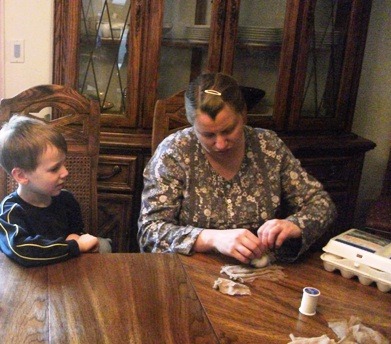
Teaching_Caleb391x344My favorite activity around the approach of Easter is to gather natural materials and ingredients to make colored Easter eggs with leaf and flower imprints.  This is a favorite tradition started when my girls were little and now carried on with the grandchildren.

Here are ingredients to gather to make the natural dye, arranged by color they will produce in final dyed egg:

Brown and tan:  Outer layers of onions, black/green tea, coffee, black walnut hulls
Yellow:  Tumeric, cumin, saffron, lemon rinds
Orange:  Paprika, chili powder, carrots
Red:  Fresh cranberries, cherries, raspberries, Spanish onion skins
Purple and blue: Blueberries, boiled red cabbage leaves, beets
Green: Spinach
Grey or slightly lavender:  Hibiscus flowers

Combine the dye source (you can use single botanical source, or combine several for differing hues) with 1 Tablespoon vinegar and cold water in a saucepan.  There are two different methods.  You can boil the eggs and dyes separately, strain the dye and add hard-boiled eggs in the shell to the hot liquid and let it soak until it reaches the desired hue.  Or, you can wrap uncooked eggs and cook them in the dye as they are being colored.  With the former method, if the eggs need to soak for more than 2 hours to reach the desired deepness of color, you may want to move them to the refrigerator if you will be eating them. Generally, however, natural dyes are going to create more earth-like subdued colors.  You can also cook all dye materials (the longer, the darker), cool and add uncooked eggs, reheat to cook egg and set aside to continue darkening the dye while cooling. (Refrigerate if over 2 hours.) If you want to have botanical impressions on your eggs, do the following before you cook the eggs:

Here are the things you want to have on hand: 
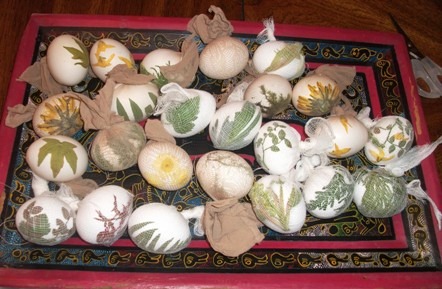
The_botanicals400x353 Fresh herb, plant and flower cuttings.  The smaller the better, however, wrapping a large fern that covers an entire egg is a stunning design when finished.  Thinner, flat items are easiest to secure tightly.  Use your imagination. Dandelion flowers will impart a bright yellow splotch in the finished egg, adding a whimsical touch.  Other fresh botanicals will add a bit of their own color, along with imprinted texture and form.  It’s fun to let the process itself randomly influence the outcome.  Children love to do this; it’s biochemistry and art all in one . . . plus you get beautiful eggs to add to the Easter hunt or to share.
Trussed_n_Ready442x289Pantyhose or cheesecloth, cut in squares that can be tied with twisty ties or rubber bands to snugly keep plant material in place.  If re-using nylon squares or cheesecloth, be sure to rinse between eggs.  You’ll want a slotted spoon to turn and remove the eggs while they are in the dye bath, and you’ll want a couple of brown paper bags cut and laid flat to place eggs on to partially dry as you remove pantyhose or cheesecloth and botanicals. 

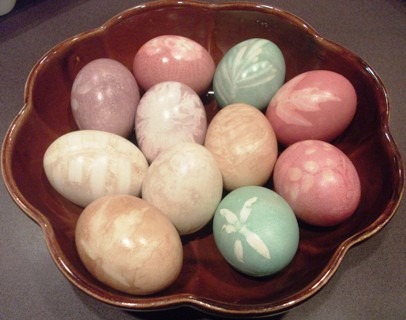
In_the_Soup450x262Here are some tips:  Older eggs work best, buy them at least a week before boiling as newer eggs are hard to peel.  I think white eggs take the natural dyes better, plus you can create additional designs with wax to add bright white to the creation before putting on leaves and flowers. Shine up Lovely_collection406x320 finished eggs when they are dry with a little olive oil rubbed in.  Eat those eggs!  Don’t waste them – make deviled eggs, egg salad or use in a salad.  Be sure to keep them refrigerated if you will be eating them.  Most of all, have fun, and encourage your children to experiment; you’ll learn new ideas from them.  If you do this project this year, send usUsing_Lavender334x412 pictures of your creations attached as a .jpg in an email: samara@wingedseed.com, including your current mailing  address and we’ll send an aromatic surprise back.

The large one pictured here was done with a Rosemary sprig.  Isn’t it lovely?

Happy Easter and Spring!


imageI mainly talk about aromatherapy, but thought I’d talk about food for a change.  I am keen on natural skincare, and tout its benefits. I also believe in feeding your skin from the inside out.  You might be surprised how beneficial certain foods can be to maintain  healthy organs and tissue, and in turn help provide necessary nutrition for supple,  vibrant skin.

The Ayurvedic diet as followed in India utilizes many spices and foods that offer myriad health benefits, like lowering cholesterol, increasing blood circulation and limiting accumulation of body fat.  Here are some of those spices and some of their benefits, along with healthy foods that aren’t always the first choice here in America. 

TURMERIC is one of Nature’s most powerful healers.  The active component, Curcumin, contained in turmeric, is now of great interest in medical research owing to properties that suggest they may help to turn off certain genes that cause scarring and enlargement of the heart. Long known for its anti-inflammatory properties, recent research shows Tumeric to be show promise for a wide range of health conditions, from cancer to Alzheimer’s disease.  Regular intake may help reduce low-density lipoprotein (LDL) or bad cholesterol and high blood pressure, increase blood circulation and prevent blood clotting, helping to prevent heart attack.  Tumeric is a natural liver detoxifier and when combined with cauliflower has shown to help prevent prostate cancer and reverse the growth of melanoma cells.  It is a natural antiseptic and antibacterial agent, useful in disinfecting cuts and burns.  It has also been used for centuries in Traditional Chinese Medicine (TCM) for treating depression.  Did you know that Turmeric is regarded as a “skin food” in the Indian culture?  Tumeric is known to speed wound healing and assists in regeneration of damaged skin. It has shown to be beneficial for psoriasis and other inflammatory skin conditions.

imageCARDAMOM is the queen of spices who sits next to the King, black pepper. It is one of the earliest spices known, mentioned by Theophrastus in the fourth century BC and five centuries later by Dioscoredes.  It is a thermogenic spice like chillies that increases metabolism and helps burn body fat. Cardamom is considered one of the best digestive aids and is believed to soothe the digestive system and help the body process other foods more efficiently. An analysis of the cardamom seed shows it to consist of carbohydrates, moisture, protein, ether extract, volatile oil, crude fibre, calcium, phosphorus and iron.  The aroma and therapeutic properties of cardamom are due to its volatile oil, which contain the chemicals cineol, terpineol, terpinene, limonene, sabinene, and terpineol in the form of formic and acetic acids. Cardamom is another spice used to treat depression.  It also is useful as an ingredient for gargling for sore throats. Combined with peppermint leaves, a few ground seeds can be boiled in water and drunk to relieve hiccups.  A cardamom seed with a small piece of candied ginger is an excellent aperitif to aid digestion.  

CHILLIES Foods containing chillies are said to be as foods that burn fat. Chillies contain capsaicin that helps in increasing the metabolism. Capsaicin is a thermogenic food, so it causes the body to begin burn calories for 20 minutes after you eat them.  Chillies also have antioxidants that will reduce cholesterol, possibly preventing diseases such as atherosclerosis and other heart disease.  They are known to give relief from nasal congestion and they help to dilate airways, reducing asthma and wheezing.  Chillies stimulate the release of endorphins that are natural pain killers and is helpful to address pain connected to shingles, bursitis, diabetic neuropathy and muscle spasm.  Chillies are also detoxifying, helping to remove waste materials along with increasing the intake of nutrients.  It is especially helpful as a gastric detoxifier that helps in food digestion.  Chillies contain vitamin B6 and folic acid. Vitamin B reduces high homocysteine levels, shown to cause damage to blood vessels and are associated with a greatly increased risk of heart attack and stroke. Chili converts homocysteine into other molecules which is beneficial to lower cholesterol level.

CORIANDER seed and Cilantro leaves from the same plant have health bimagebenefits, while also being a good source for dietary fiber, iron and magnesium.  These food additives are rich in phytonutrients and flavonoids.  Coriander is anti-inflammatory and therefore helpful in easing the symptoms of arthritis.  It can help lower blood sugar, prevent urinary tract infections and lower blood pressure.  Coriander contains an antibacterial compound that may prove to be a safe, natural means of fighting Salmonella, a frequent and sometimes deadly cause of foodborne illness, suggests a study published in the June 2004 issue of the Journal of Agriculture and Food Chemistry. U.S. and Mexican researchers isolated the compound – dodecenal, which laboratory tests showed is twice as effective as the commonly used antibiotic drug gentamicin at killing Salmonella.

GARLIC is a natural antibiotic  An effective fat-burning food, garlic contains the sulphur compound allicin which has anti-bacterial effects and helps reduce cholesterol and unhealthy fats. In general, a stronger tasting clove of garlic has more sulphur content and hence more medicinal value. I much prefer using fresh garlic and I keep a refrigerated jar of chopped garlic ready for cooking at all times.  Research has determined that there are greater health benefits from cooked garlic, and most of the better garlic supplements are made from aged and dried garlic.  Although rare, eating too much raw garlic can cause irritation or damage to the digestive tract.  Some people are known to be allergic to garlic; symptoms include skin rash, increase in temperature and headaches. It also could potentially disrupt anti-coagulants, so garlic supplements are best avoided before surgery. 

MUSTARD OIL: This has low saturated fat compared to other cooking oils. It has fatty acid, oleic acid, erucic acid and linoleic acid. It contains antioxidants, essential vitamins and reduces cholesterol, which is good for the heart.  Cardiology research now shows that mustard oil is healthier than olive oil because it has no trans-fats, low saturated fats, high mono-unsaturated fats, high polyunsaturated fatty acids like omega-3, and stability at high temperatures making it an excellent cooking oil.  The mustard seeds themselves can be used in a number of culinary dishes.  very good source of selenium, a nutrient which has been shown to help reduce the severity of asthma, decrease some of the symptoms of rheumatoid arthritis, and help prevent cancer. They also qualify as a good source of magnesium. Like selenium, magnesium has been shown to help reduce the severity of asthma, to lower high blood pressure, to restore normal sleep patterns in women having difficulty with the symptoms of menopause, to reduce the frequency of migraine attacks, and to prevent heart attack in patients suffering from atherosclerosis or diabetic heart disease.

CABBAGE, unfortunately, is often overlooked and misunderstood.  While cabbage is a delicious and healthful staple in other countries, it is almost foreign to Americans, with the exception of good old fashioned cole slaw.  It is a low-cost, excellent vegetable with a wide variety of uses in stew, soup, hearty ratatouille, salads and other dishes.  Raw or cooked cabbage inhibits the conversion of sugar and other carbohydrates into fat. Hence, it is of great value in weight reduction.  Delicious new variations of cole slaw made with oil and vinegar are quickly replacing the caloric-ridden version made with high-calorie mayonnaise.  Rich in nutrition and fiber, cabbage is an absolutely phenomenal source of Vitamin C. Even more impressive is that cabbage is famous for a specialized, naturally occurring, nitrogenous compound known as indoles. Current research indicates that indoles can lower the risk of various forms of cancer. Modern science has proven beyond a reasonable doubt that the health benefits and therapeutic value of cabbage, which also plays a role in the inhibition of infections and ulcers. Cabbage extracts have been proven to kill certain viruses and bacteria in the laboratory setting. Cabbage boosts the immune system’s ability to produce more antibodies. Cabbage provides high levels of iron and sulphur, minerals that work in part as cleansing agents for the digestive system.  Cabbage contains, in addition to high levels of vitamin C, Vitamin E (good for skin integrity) and vitamin B. The varieties of cabbage are many; there is Red, Savoy, Napa . . . and don’t forget Bok Choy with its light, celery type flavor. 

imageHONEY, although unlikely,  is an amazing home remedy for obesity. It mobilizes the extra fat deposit in the body allowing it to be utilized as energy for normal functions. Honey contains complex sugars and carbohydrates, vitamins and minerals, amino acids and antioxidants.  Antioxidants slow down aging by reducing free radicals.  A recent study at the U. of California concluded that honey contains as many oxidants as spinach, apples, oranges and strawberries.  It is true that honey is calorie-rich and contains simple sugars, and more calories than table sugar.  However, according to the USDA Agriculture Research Service, our body tolerates honey better compared table sugar. Eating honey is better for people with diabetic conditions as it is less likely to cause blood sugar spike. Another 2004 study conducted by the University of California found that eating 4 to 10 tablespoons of buckwheat honey per day for one month did not cause weight gain.  A simple teaspoon of honey can soothe sore throats in children, although it is not recommended for children under 2 years of age. A study at Penn State concluded that honey did a better job reducing the severity, frequency and bothersome nature of nighttime cough from upper respiratory infection than dextromethorphan or no treatment. A tablespoon of honey with a tablespoon of apple cider vinegar, taken with hot water early in the morning is a tried and true folk remedy tonic for good health.  And, another study at the Royal Pharmaceutical Society determined that a tablespoon or two of honey at bedtime can greatly reduce insomnia. Most of us are well aware of the use of honey in skincare products such as masks and baths
 
BUTTERMILK AND YOGURT: Buttermilk is the somewhat sour, residual fluid that is left after butter is churned. This probiotic food contains just 2.2 grams of fat and about 99 calories, as compared to whole milk that contains 8.9 grams fat and 157 calories. Regular intake provides the body with all essential nutrients and does not add fats and calories to the body. It is thus helpful in weight loss.  Buttermilk is more digestible than milk and contains vitamin B12, calcium, riboflavin and phosphorous. Along with yogurt, it is easily substituted for sour cream in myriad dishes, on baked potatoes or substituted in baking, i.e., pancakes. Yogurt (now seeming to take over the dairy aisle of the grocery store) provides good bacteria, often called probiotics which refers to the living organisms that result in health benefit when eaten in adequate amounts.  Yogurt is best fresh and plain (without added fruits and sweeteners, which you can add yourself for desserts .)   
 
imageWHOLE GRAINS are fiber-rich foods and good sources of complex carbohydrates, vitamins and minerals, as well as important nutrients such as selenium, potassium and magnesium..  Low in fats, most of them absorb cholesterol and help increase the secretion of the bile that emulsifies fats.  Whole-grain versions of rice, bread, cereal, flour and pasta can be found at any grocery store. Many whole-grain foods come ready to eat. These include a variety of breads, pastas and ready-to-eat cereals.  We all know about brown rice, but here are a few of my other favorites:  Barley:  Roman gladiators ate barley for great strength and stamina.  It’s rich, nut-like flavor is the cornerstone of the recipe below.  Kasha: This grain is roasted whole-grain buckwheat oats and very common to staple dishes in Eastern Europe throughout the Slavic countries.  it is gluten-free, yet very high in protein, B vitamins, phosphorous, potassium, iron and calcium.  Millet: Yes, the very bird seed you see in mixes for small songbirds.  Very high in protein – 1/2 cup cooked millet provides 4.2 grams of protein, also gluten free and full of niacin, B6, calcium, iron, potassium, magnesium and zinc.  Quinoa: Pronounced keen-wa, quinoa isn’t actually a grain, it’s more closely related to leafy greens like spinach and chard.  Full of nutritional value including all the essential amino acids and more protein than any of the grains. 

New Aromatherapy Kit and Educational Book

imageJust in time for Valentine’s Day!  Introductory price $95.

The Home Aromatherapy Starter kit includes generous 15 ml bottles of: Lavender, Tea Tree, Geranium, Eucalyptus, Rosemary, Cedarwood, Mandarin, Peppermint, Marjoram, Lemongrass and Oregano and comes festively packaged in a recycled corrugated trunk with a festive white organza ribbon.

Accompanying this kit is our Aromatherapy Beginners Guide to Safe and Simple Use of Essentials Oils for Health and Beauty for the Whole Family. This comprehensive 24-page booklet, fresh off the press, covers information about aromatic plants, extraction methods, how to determine quality essential oils, advice for care of essential oils to maintain freshness and integrity, information on how essential oils interact with the human body and mind and how to use them safely and methods of effective application. Filled with color pictures, the information covers each essential oil specifically, including botanical and historical information and the most recently researched safe aromatherapy use.

There is a recipe section, covering children and elderly considerations, respiratory, mood & psyche, immunity and infections, effective skin care, muscular aches and pains, household cleaning and environmental aromatics, travel and much more. The recipes are specific to the essential oils in the kit. Researched and written by Marcia, our resident aromatherapist with over 20 years formal education and experience using essential oils. This is an excellent gift for the family or individual, sure to serve for many months or up to a year before having to replenish any of the essential oils. All of the essential oils in the kit are available individually and are chosen for both effectiveness and low cost.


Samara Botane has embraced a number of changes to lower our carbon footprint and hold to our commitment of stewardship and ecology. You can see the progress we’ve made here, including eco-policies we have put into place in the last several years. 

christmas tree2One of the small things we do personally each year has been to steam distill the twigs/needles from our Christmas tree.  This gives us healthful aromatic products that serve us throughout the coming year, extending the precious benefits of the tree.  How easily Westerners quickly discard their  trees, perhaps with no realization of the years of growth and energy Nature has invested on our behalf.  I hope you will consider exploring the additional uses and benefits, beyond the magical decoration for the holiday season, and save some of those branches to make delightful and healthful products for yourself and your family.  This year, we will again be distilling the gorgeous Noble Fir that blessed our family this season and offering the hydrosol for sale after it has rested for a few weeks and passes scrutiny.  I decided to look for other ideas to share, in order to savor our Christmas trees, long after the season.

Firs, Pines and Spruces are the most preferred Conifers for use in aromatherapy, and in most culinary applications.  In this blogpost, I focus on Fir which includes Abies procera (Noble Fir) pictured,  Abies grandis (Grand Fir),  Abies balsamea (Balsam Fir), and Abies alba (White Fir).  Olfactory attributes as described in perfumery for Firs are: strongly balsamic, slightly fatty-oily reminiscent of a pine forest and fruity-balsamic undertones.  There are subtle olfactory nuances for each species. Chefs, like Rene Redzepi of Copenhagen describe Fir in culinary terms as  having a pungent, citrusy flavor with green-minty backnotes. 

If you do not have distillation equipment, you can make a simple aromatic herbal infusion by simmering the chopped needles (ratio: equal parts fresh water to needles, but make sure needles are covered completely by water)  in a covered pot on the stove for 10-20 minutes, reduce heat and let cool in tightly covered pot to avoid loss of aromatic oils.  Your infusion can be used to make simple herbal syrup of medium thickness (add equal parts of your infusion and organic sugar, bring to a boil stirring frequently, reduce heat and simmer until candy thermometer reaches at least 185 degrees, but no hotter than 220 degrees.  You want to ensure the sugar is completely dissolved, but mixture does not turn to candy.  Allow the syrup to cool gradually and do not refrigerate until entirely cool.

You can glaze a sponge cake for an unusual dessert sure to delight guests, or use this pungent syrup for a tasty fish or mussels dish to top rice.  Native Americans often prepared fish wrapped in Pine needles, cooked over an open fire.  You can grind needles with a mortar and pestle or coffee grinder dedicated to herbs and mix with other savory herbs, salts and peppers for a tasty mixture for soups and stews.  Experiment and share your favorite ideas back with us!

The infusion, as well as the ground botanical, can be added to a bath along with sea salts and a few drops of Fir essential oil for a reviving soak.  You can make an aromatic spray for your home or car with the infusion, again adding a few drops of the essential oil for strength.  The dried botanical is also a lovely incense, burned on charcoal. 

herbal syrups 402x229I made a few herbal syrups towards the end of the growing season.  They were great gifts for friends and family.  These include Spearmint, Orange, Lavender and Rugosa Rose.  All but the Orange were from my garden.  Pictured at right, they are made with organic sugar, with no added color, but strengthened with a few drops of the requisite essential oil.  We are offering one of each as a bonus to our Facebook group members – the first four to submit orders of $100 or more with the Coupon Code will receive a 5-oz. bottle, randomly chosen.  You can join the Samara Botane Facebook Group here to get details.   Take a look at other aromatic offerings at our website here.

We will be holding another Treasure Hunt in the coming months, and watch for Rob’s upcoming report on aromaconnection exploring the affects of climate change on aromatic plants and crops.

I and the rest of the staff at Samara Botane welcome the New Year, bracing for its challenges.  We wish you a very good twenty-eleven and remind you to use your aromatics, especially for stress and anxiety, sleeplessness and combating pollen and viral pollution.

Inhale Deeply and Breathe . . . Breathe . . . Peace. 
Marcia 


42-15620395Seasonal viral and bacterial influenza is infection of the sinus, lungs and airways, and presents with one or more of the following symptoms: fever, runny nose, sore throat, headache, muscle aches and a general feeling of weariness. It used to be that winter was the most likely time you would get the flu. The typical flu season runs from late November to March, however, there are possible outbreaks at other times during the year.

There are many sensible ways to keep seasonal viral and bacterial influenza at bay. Common sense and scents can help. Create awareness in school and the workplace and adopt and share one or more of the following suggestions that can put your mind more at ease:

Wash your hands often throughout the day with pure soap. Avoid touching your eyes, nosecolds flu washing hands 220x165 or mouth as germs enter your body more easily this way. Steer clear of synthetic chemical antibacterial liquid cleansers that strip your skin of its protective flora and actually create bacterial rashes. We carry several lovely choices of pure, natural soap, Black Soap from Africa, made from powdered Cocoa pods and the peel of the Plantain, using Coconut and Palm Kernel oils, is a wonderful choice. This soap will amaze you with its wonderful cleaning power and clean smell. We use it for everything!  It comes in a bar, or liquid, including a handy 2 oz. size for your purse or backpack.  You can easily make your own hand-wipes, spritzing cut-up paper towels with our Healthy Skin Hydrosol and conveniently carrying in a ziploc bag.

To avoid spreading disease, stay at home if you are sick, unless absolutely impossible. If you sneeze and cough at work or school, cover your mouth with a handkerchief or tissue. Do your best to keep those germs from going airborne and infecting others, prolonging illness in the workplace or school. Avoid crowds, and especially close contact with sick people. Generally keeping a distance of about six feet between yourself and others helps reduce your risk of exposure.

Using aromatics can introduce antibacterial, antiviral protection into your respiratory, sinus and throat regions. First Defense™ is a proprietary blend of the most powerful, yet gentle essential oils proven to address colds and influenza. This synergy is handy to have at hand when you feel the need to keep germs at bay. It is available in a convenient inhaler, especially good for travel, and for teachers, who are constantly exposed to the colds and flu of the younger population. It is also available as a diffuser synergy.  

Proper ventilation significantly reduces the concentration of pathogenic bacteria and viruses76582_L_air_Fr_room_sp_140 in the air. Simply opening a window can help; unfortunately, this is not possible in many workplaces. If your workplace allows, use an environmental aromatic blend of essential oils like First Defense™, or Spring Breath™ in a personal diffuser on your desk to improve the air quality. You can also use them in a diffuser that works in the cigarette lighter socket in your car, or make a fine mist spritzer with the synergy suspended in water. You’ll find a wide range of aromatic diffusers here at Samara Botane, as well as the bottles and closures.  For routine prevention, you might also enjoy our L’air Frais™ Aromatic Room Spray, a bright, fresh environmental mist to clean and purify air.

Drink lots of water and eat sensibly. Foods that can boost your immune system include raw garlic (actually kills cold and flu virus), yogurt (immuno-stimulatory effects), green tea (powerful antiviral), fruits and vegetables (preferably fresh: full of vitamin C: apples are an excellent choice). If you get sick, avoid mucous-producing foods like milk, cheese . . . and, yes, ice cream! Pay attention to your nutritional needs and include vitamins and supplements as necessary. See your doctor and other health practitioners regularly, including your dentist.

Marcia’s Chicken Tortellini Soup for Flu Season 

colds flu chicken tort soup 260x1953 large chicken breasts (brown in olive oil in skillet, remove and cut into cubes, set aside-chicken should be white all the way through)

Sauté to soften in skillet (adding more olive oil if needed):
1 1/2 c. celery, diced
1 1/2 c. carrots, diced
2 small or 1 medium onion diced
3-6 garlic cloves, minced (the more the better)

Add above ingredients to stockpot with:
8 c. chicken broth (add water as needed) 
1/2 c. fresh parsley, chopped
3 c. spinach leaves, chopped (or 3 c. broccoli)
1 15-oz. can sliced tomatoes (do not drain)
3-4 Tbsp. Braggs Amino Acids (optional)
2 tsp. Dried Tarragon, ground in mortar & pestle to release optimum flavor  
salt and freshly ground pepper to taste
cook at slow boil for 15 minutes
Add:
12 oz. fresh cheese tortellini pasta
cook for another 4-5 minutes or according to directions on pasta pkg.

Spoon into bowls, add:
freshly grated Parmesan for garnish, optional

This soup will keep well for several days refrigerated and can be reheated.

More tips for avoiding colds and flu:

no-smoking-symbol-140x139Quit smoking. Cigarette smoking is a high risk factor for influenza, and there is a higher mortality rate from influenza for smokers than non-smokers. Smoking causes structural changes in the respiratory tract and a decrease in immune response.

Dress properly. Thermo receptors (our body’s temperature sensory receptors) are concentrated on hands, feet, neck and head. Keep these parts of your body warm.

Modern life is stressful and many of us are worried, apprehensive and dealing with difficulties. This mental and physical state can lower your immune capability and create an environment for colds and flu to take hold. Pay conscious attention to reducing the stress in your life and pamper yourself – take time to relax. Luxurious aromatic baths and footbaths can soothe tired and sore muscles and calm frazzled nerves. Treat yourself to a therapeutic massage. Take long walks in the open air, away from the smog and traffic. Find time to relax with soothing music and/or a good book. Have a cup of tea with a friend. Talking to an empathetic ear can have a therapeutic effect.

We at Samara Botane hope you find these simple suggestions useful. We are here to serve through the aromatic life. You’ll find specific aromatherapy uses for each essential oil on the “uses” tab in the shopping cart on our website.


We_the_People Sometimes you might feel put off, or even insecure, to speak up when you think something isn’t quite right and should be changed.  There are those who insist in a “representative” democracy that you should simply vote for your representatives in Congress and your state legislature and leave it to them to make the right decisions.  It is easy to think that you are just one person, one small voice and you can’t possibly make a difference.  Plus, just who has the time to get involved these days?  Who can compete with all those corporate lobbyists who have such great access and influence when it comes to lawmaking?  What about those powerful NGO’s and well-funded Interest Groups?  Sometimes, even advocating for a stop sign in your neighborhood can bring stressful opposition from your neighbors.  And, trying to agree with one another can certainly be difficult.  Avoidance  might often seem the better choice.

I hope you don’t think so.

Let’s first define the difference between advocacy and lobbying as often they are confused. Advocacy is the act of pleading or arguing in favor of something, such as a cause or policy.  Lobbying activities are aimed at influencing members of a legislative body on legislation. 

Recently, an unprecedented landmark Supreme Court decision, called “Citizens United”,  unleashed unlimited corporate money that can now be donated to political campaigns.  This means that good ideas that come from the people, from the grass roots, can be challenged even more greatly than they already are by the guys with the big bucks.  Constitutional scholars and policy wonks will be discussing this decision for decades.  And, there is already an effort brewing in Congress to pass laws that will rescind this imbalance of power in our democracy, which could potentially destroy it. 

Capitol_Poppies This SCOTUS decision is perhaps the most important reason to get involved with issues that will affect you and your business colleagues, and hopefully it is a wake up call.   It is my opinion that getting involved is not only a right, but a responsibility. If we believe in the value of our democracy, it is up to us to participate vigorously to insure it exists for our children and grandchildren. Here are a few “pep talks” that will hopefully stir you off the sideline.

1.  One person can make a difference.  Asking an elected official for support can produce results that serve the public and bring awareness of the issues like those of small business to more people.  A single advocate – a respected individual in the community – has been able to bring together like-minded people to convince a key member of Congress to change or eliminate language in a bill if he/she is convinced of the adverse consequences.

2.  Advocacy is essential to our democratic form of government.  The First Amendment to the United States Constitution protects the right of the people to petition the government – the simple act of informing our policy makers about important public issues.  Without advocacy, our issues simply will not be considered.

3.  Lobbying is easy.  There is nothing mysterious about lobbying.  At its heart, lobbying is the simple act of telling a story and being persuasive.  An advocate can make an important difference in a legislator’s position on an issue or pending bill by explaining through personal experience the importance of your cause to the affected community.

4.  Policy makers need your expertise.  Legislators depend on solid information to help make their decisions, and they want to hear from the people they represent.  Becoming a reliable source of information for your legislators will carry weight in their decision-making, especially if you, the advocate, are the expert on the issue.

Those of us who are Indie Beauty Network members are fortunate to have Donna Maria Coles Johnson at the forefront of issues facing small personal care products businesses.  She is drawing terrific leadership from within her membership and organizing a cohesive message for greater impact.  Currently, we are working to oppose H.R. 5786 Safe Cosmetics Act 2010, which, we believe, will have grave consequences for not only personal care products manufacturers, but others who use manufacturing ingredients such as essential oils in an alternative practice.  You can read the petition statement and sign the Oppose The Safe Cosmetics Act of 2010 petition.

Thanks for listening.

Marcia


Samara Botane Products You may think if you are a natural perfumer,  aromatherapist, massage therapist, or other alternative practitioner using essential oils or other raw botanical extracts or materials in your practice, craft or art,  that this bill will not directly affect you. At least you don’t think so.  However, you could be dead wrong.  If you are not a licensed doctor (M.D. or D.O. have the broadest authority) who can legally write a prescription, then you may be at risk under H.R. 5786 if you make essential oil blends or synergies for your clients or natural perfumes sold to clients (the general public). Thus far, essential oils have not been legally designated as either prescription or over-the-counter drugs.  The definition most used is, “A volatile oil, usually having the characteristic odor or flavor of the plant from which it is obtained, used to make perfumes and flavorings.”  In other words, they are manufacturing ingredients.

In H.R. 5786 (subchapter B), the definition of ‘ingredient’ reads:

“The term ‘ingredient’ means a chemical in a cosmetic, including – -
(A)  chemicals that provide a technical or functional effect;
(B)  chemicals that have no technical or functional effect in the cosmetic but are present by reason of having been added to a cosmetic during the processing of such cosmetic;
(C)  processing aids that are present by reason of having been added to a cosmetic during the processing of such cosmetics;
(D)  substances that are present by reason of having been added to a cosmetic during processing for their technical or functional effect;
(E)  contaminants present at levels above technically feasible detection limits;
(F)  contaminants that may leach from container materials or form via reactions over the shelf life of a cosmetic and that may be present at levels above technically feasible detection limits;
(G)  the components of a fragrance, flavor, or preservative declared individually by their appropriate label names; and
(H)  any individual components of a botanical, petroleum-derived, animal-derived, or other ingredient that the Secretary determines to be considered an ingredient. 

It is probably worth your while to ponder these definitions and take in their full impact.

Here in Washington state, the definition of ‘manufacturing’ in the state revenue code (RCW) reads:

"Manufacturer" means every person who, either directly or by contracting with others for the necessary labor or mechanical services, manufactures for sale or for commercial or industrial use from his or her own materials or ingredients any articles, substances or commodities.” (RCW 82.04.110)

"To manufacture" embraces all activities of a commercial or industrial nature where labor or skill is applied, by hand or machinery, to materials so that as a result thereof a new, different or useful substance or article of tangible personal property is produced for sale or commercial or industrial use . . . “

As you can see, this definition applies to the individual ‘person’, whether they are registered or incorporated as a business or not.  We can find similar manufacturing legislation in every state of the Union.  There is no exemption for individual practitioners, as many would define themselves.

I urge all my customers and clients, whether large corporations, small businesses or individuals to become more aware of the growing legislative efforts across the world that may affect the use of essential oils.  Please join the other 3,593 (and growing) signers in the advocacy efforts to oppose H.R. 5786 and make a point to stay abreast similar legislative issues.  

Thanks for listening,

Marcia


titanic_245x257

This morning, while juggling the usual busy-ness of business, I took time see what I could add to the important effort being put forth by the indie personal care products industry to try to avert the potential disaster known as the H.R. 5786 Safe Cosmetics Act 2010, aggressively, if misguidedly, championed by the Campaign for Safe Cosmetics and others. I read the latest earnest and heartfelt blog posts from my colleagues, knowing that they too could be spending their time more productively and enjoyably than having to deal with this nonsense.  And, it is non-sense in the strictest definition, when you peel the layers to examine in more detail.  To bring you up to date with what my fellow indies are saying, this succinct recap with a sampling of quotes and links to indie opinions on Essential U will be helpful to get you up to speed if you are not already familiar with the Opposition to this flawed bill  that could result in grave unintended consequences for the indie personal care products community.

I was pleased to see that Annie Leonard’s (CFSC’s latest partner in fear mongering) disgraceful  Story of Cosmetics was outstandingly critiqued by Lee Doren, author of How the World Works, a 2009 IPPY award winning book.  How Annie can continue to drink the CFSC Kool-Aid is really amazing after this scathing well researched and factually accurate indictment.

I then girded my loins to  read the latest propaganda on Campaign for Safe Cosmetics itself,  knowing that I would find either delusion or untruth, and most probably both.  I wasn’t disappointed. So filled with vagaries, blatant spin and misstatement, where do I start?  The latest missile on the CFSC website is entitled, The Safe Cosmetics Act of 2010: What It Means for Cosmetics Companies. It is, no doubt, their attempt to challenge those of  us opposing the SCA.

Under the sub-header, “How will the Safe Cosmetics Act of 2010 impact small businesses?”
”The Campaign for Safe Cosmetics strongly supports small businesses and we have always been major advocates for elevating the work and values of the independent businesses that are the driving force of innovation toward health and safety in the personal care products industry.”

Gee, that definition fits my business, as well as many of my colleagues standing up against the SCA, yet why do we feel the CFSC is  working against our interests, and not the “major advocate” they claim to be? Most of us were early signers to the Compact, why do we now distance ourselves?

“We are fully committed to working together with companies in our Compact for Safe Cosmetics community and others to ensure that the Safe Cosmetics Act of 2010 does not unfairly burden small businesses that are already committed to making the safest products possible.”

Now, this is just flat untrue. CFSC has never “worked with” their company signers in the true sense of the phrase. In my experience as a signer for several years, theirs was a top-down agenda. I was never solicited for advice, comment or approval. There was no “partnership” as implied above. There was never a visible desire for or effort towards consensus from all stakeholders.  Scrutiny from those of us in the indie personal care products industry has revealed that many, if not most, of the signers in the SFSC “community” are very small businesses most likely blissfully unaware of the potential harm that could come to them as a result of passing the Safe Cosmetics Act 2010 and its unintended consequences. Or, because these small company signers have experienced non-responsiveness and non-support from CFSC (with regard to this and other legislative issues, and grossly inaccurate toxicity claims), some companies have requested to have their company name removed and CFSC has not honored their requests. My beloved nerdy husband and partner, Rob, did a short analysis back in 2008 when we requested to be removed.  He found an approximate attrition rate of 33% of the then 733 total Compact signers. A random sampling of those companies removed found 65% of them still in business, indicating that there were voluntary requests for removal by the companies themselves for one reason or another. Hmm, I wonder how robust this list of companies would look now with all who have since requested their names removed or CFSC actual compliance with earlier requests from those companies still listed. Or those with links to nowhere (intimating that the company is probably out of business) removed and the list currently updated. Those of us who have successfully had our company name removed report that it took repeated contact and demand over a long period of time, from 6 months to over a year or more! Does this sound to you like CFSC is “fully committed to working together”? Or are those unsuspecting companies just pawns in a larger agenda?  If you are a signer, please add your personal comments below.

“There is a lot of misinformation circulating about the Safe Cosmetics Act of 2010 that it will "kill small businesses." This couldn’t be further from the truth and is an unfortunate misrepresentation of the facts.

Where is the substance in this statement? Do they actually ever cite or reference specific misinformation being promulgated out here to back these vague attacks? Anything with some factual teeth?  No.  We in the indie community have found and have accurately corrected gross misrepresentation of the facts by CFSC, most especially the unsubstantiated scientific facts on which they base their agenda, until we are blue in the face.  However, they continue to ignore our reasonable and factual objections and continue to up the adversarial ante, seemingly incapable of introspection or, most importantly, the desire to ascertain the real facts upon which any effective legislation must be based. Our protests fall on dead ears.  This is how they show “strong support” of and “elevate the work and values of the independent businesses that are the driving force of innovation toward health and safety in the personal care products industry.” If you are new to this issue, please refer back to the synopsis of blog posts here for background, support and veracity of my statements here.

CFSC goes on to present further distortion of the language in the bill.

“ The Safe Cosmetics Act of 2010 contains specific provisions to protect and help small businesses, including:

  • Fee exemptions for small businesses with less than $1 million in annual sales.
  • Data sharing and transparency: small businesses will benefit by having access to safety assessments conducted by other cosmetics companies and suppliers that are currently kept private, and it will open up the information flow so all companies have easier access to the information that will help them make the best decisions about product safety.
  • "Producer right-to-know" provisions that will enable cosmetics companies to get full information from suppliers about toxicological data and safety information for cosmetic ingredients, including the chemicals in fragrance and preservatives.”

Looks like a Pollyanna picture of goodness and transparency, right?  They don’t tell you that registration fees IS the only burden that small business is possibly exempted from if this bill were to become law. That small business is not exempted from having the burden of reporting relatively useless ingredient minutia (sometimes trace ppm), as well as safety data for that minutia – some of which has already been researched and established by the FDA (or published by other scientific researchers) for the most part.  Data sharing?  Do you honestly believe that Johnson & Johnson or Estee Lauder are going to open their research database to every mom and pop soap company or indie personal care products manufacturer? You can only guess how many lawyers will get richer as a a result of this inclusion, if it actually exists in the final law.  “Producer right-to-know” provisions?  This part of the bill is undoubtedly aimed at the plethora of synthetic chemical producers who concoct “better living through chemistry”, manufacturing some of those long names that Annie Leonard and CFSC scare you with. Frankly, some of them scare me, too, but I am also educated enough to know that not all chemical innovation is bad for you. It is here that the sensible indie movement towards naturals meets the giants of the cosmetic industry on shared opinion.

Here is but one example of possible far-reaching and damaging unintended consequences under this “Producer right-to-know” requirements of the SCA.

We at Samara Botane purchase some essential oils from small cooperative or family distillers around the world. These are small to mid-sized producers, often family owned, who have been growing or wildcrafting aromatic plants for generations for aromatic distillation to obtain essential oils. We were introduced to these small producers in the late 80’s and early 90’s at myriad gatherings during the explosion of new aromatic plant research,  emerging aromatherapy schools and conferences around the globe to share scientific research based on the chemistry of essential oils and to explore the indigenous cultural use more in depth by those of us in the West.  These producers are not always expert at identifying the exact chemical constituents of their products, although many are much more expert now than when we first started importing. They provide the required MSDS, CAS and other legally required information for identification for international commerce, but their expertise is not always in the end “use” of their product. Nor should it be; we look them for their artistry and years of experience in the sustainable management of the crops themselves and the proper distillation for a quality essential oil.  It is up to us, the importers, and aromatherapy experts to ethically test and analyze further research  for the many safe uses. Many of these essential oils are already classed as G.R.A.S. (Generally Regarded as Safe) and are used in the food and flavor industry as well as natural skincare and personal products. You can only come to the reasonable conclusion here that unintended consequences would possibly adversely affect these small producers across the globe.

The very fact that we emerging indies exist and have been researching, developing and providing alternative, safer personal care, as well as more in-depth consumer information is a primary reason that the “biggies” are slowly moving in the direction of more natural ingredients, which we indies believe are safer.  Sure, it’s a behemoth and cumbersome industry, and there is “greenwashing”, but hey, there is also progress towards more safe and sustainable ingredients.  Without the continued good work of the indies who started the “green” revolution in personal care products, will the biggies still feel a need to manufacture better, more natural products if we aren’t there to prod and innovate them, especially if they contain natural ingredients more costly than some of their synthetic chemical counterparts?  Since the primary mission of most big corporations is to make a profit, what do you think?

Our primary business is supplying essential oils – on our retail website, to massage and aromatherapy schools and other professional institutions, hospitals and clinics, and to small personal products manufacturers. All could be adversely affected if the SCA bill becomes law, increasing the domino effect of unintended consequences.

If you purchase personal care products, or supplies from small, independent personal product companies and ingredients suppliers, please heed our voices of reason.  Read the Oppose SCA petition here and , please sign.  You will see that I am not alone, we are now approaching 2,140 signatures as I prepare to launch this missile into cyberspace.  We need many more of you to speak up on our mutual behalf.

Rant_girl_350x241l Thanks for listening and thanks for your support.

Marcia (Rant Girl)

© 2008-2009 Marcia Elston Suffusion theme by Sayontan Sinha