We_the_People Sometimes you might feel put off, or even insecure, to speak up when you think something isn’t quite right and should be changed.  There are those who insist in a “representative” democracy that you should simply vote for your representatives in Congress and your state legislature and leave it to them to make the right decisions.  It is easy to think that you are just one person, one small voice and you can’t possibly make a difference.  Plus, just who has the time to get involved these days?  Who can compete with all those corporate lobbyists who have such great access and influence when it comes to lawmaking?  What about those powerful NGO’s and well-funded Interest Groups?  Sometimes, even advocating for a stop sign in your neighborhood can bring stressful opposition from your neighbors.  And, trying to agree with one another can certainly be difficult.  Avoidance  might often seem the better choice.

I hope you don’t think so.

Let’s first define the difference between advocacy and lobbying as often they are confused. Advocacy is the act of pleading or arguing in favor of something, such as a cause or policy.  Lobbying activities are aimed at influencing members of a legislative body on legislation. 

Recently, an unprecedented landmark Supreme Court decision, called “Citizens United”,  unleashed unlimited corporate money that can now be donated to political campaigns.  This means that good ideas that come from the people, from the grass roots, can be challenged even more greatly than they already are by the guys with the big bucks.  Constitutional scholars and policy wonks will be discussing this decision for decades.  And, there is already an effort brewing in Congress to pass laws that will rescind this imbalance of power in our democracy, which could potentially destroy it. 

Capitol_Poppies This SCOTUS decision is perhaps the most important reason to get involved with issues that will affect you and your business colleagues, and hopefully it is a wake up call.   It is my opinion that getting involved is not only a right, but a responsibility. If we believe in the value of our democracy, it is up to us to participate vigorously to insure it exists for our children and grandchildren. Here are a few “pep talks” that will hopefully stir you off the sideline.

1.  One person can make a difference.  Asking an elected official for support can produce results that serve the public and bring awareness of the issues like those of small business to more people.  A single advocate – a respected individual in the community – has been able to bring together like-minded people to convince a key member of Congress to change or eliminate language in a bill if he/she is convinced of the adverse consequences.

2.  Advocacy is essential to our democratic form of government.  The First Amendment to the United States Constitution protects the right of the people to petition the government – the simple act of informing our policy makers about important public issues.  Without advocacy, our issues simply will not be considered.

3.  Lobbying is easy.  There is nothing mysterious about lobbying.  At its heart, lobbying is the simple act of telling a story and being persuasive.  An advocate can make an important difference in a legislator’s position on an issue or pending bill by explaining through personal experience the importance of your cause to the affected community.

4.  Policy makers need your expertise.  Legislators depend on solid information to help make their decisions, and they want to hear from the people they represent.  Becoming a reliable source of information for your legislators will carry weight in their decision-making, especially if you, the advocate, are the expert on the issue.

Those of us who are Indie Beauty Network members are fortunate to have Donna Maria Coles Johnson at the forefront of issues facing small personal care products businesses.  She is drawing terrific leadership from within her membership and organizing a cohesive message for greater impact.  Currently, we are working to oppose H.R. 5786 Safe Cosmetics Act 2010, which, we believe, will have grave consequences for not only personal care products manufacturers, but others who use manufacturing ingredients such as essential oils in an alternative practice.  You can read the petition statement and sign the Oppose The Safe Cosmetics Act of 2010 petition.

Thanks for listening.

Marcia


Samara Botane Products You may think if you are a natural perfumer,  aromatherapist, massage therapist, or other alternative practitioner using essential oils or other raw botanical extracts or materials in your practice, craft or art,  that this bill will not directly affect you. At least you don’t think so.  However, you could be dead wrong.  If you are not a licensed doctor (M.D. or D.O. have the broadest authority) who can legally write a prescription, then you may be at risk under H.R. 5786 if you make essential oil blends or synergies for your clients or natural perfumes sold to clients (the general public). Thus far, essential oils have not been legally designated as either prescription or over-the-counter drugs.  The definition most used is, “A volatile oil, usually having the characteristic odor or flavor of the plant from which it is obtained, used to make perfumes and flavorings.”  In other words, they are manufacturing ingredients.

In H.R. 5786 (subchapter B), the definition of ‘ingredient’ reads:

“The term ‘ingredient’ means a chemical in a cosmetic, including – -
(A)  chemicals that provide a technical or functional effect;
(B)  chemicals that have no technical or functional effect in the cosmetic but are present by reason of having been added to a cosmetic during the processing of such cosmetic;
(C)  processing aids that are present by reason of having been added to a cosmetic during the processing of such cosmetics;
(D)  substances that are present by reason of having been added to a cosmetic during processing for their technical or functional effect;
(E)  contaminants present at levels above technically feasible detection limits;
(F)  contaminants that may leach from container materials or form via reactions over the shelf life of a cosmetic and that may be present at levels above technically feasible detection limits;
(G)  the components of a fragrance, flavor, or preservative declared individually by their appropriate label names; and
(H)  any individual components of a botanical, petroleum-derived, animal-derived, or other ingredient that the Secretary determines to be considered an ingredient. 

It is probably worth your while to ponder these definitions and take in their full impact.

Here in Washington state, the definition of ‘manufacturing’ in the state revenue code (RCW) reads:

"Manufacturer" means every person who, either directly or by contracting with others for the necessary labor or mechanical services, manufactures for sale or for commercial or industrial use from his or her own materials or ingredients any articles, substances or commodities.” (RCW 82.04.110)

"To manufacture" embraces all activities of a commercial or industrial nature where labor or skill is applied, by hand or machinery, to materials so that as a result thereof a new, different or useful substance or article of tangible personal property is produced for sale or commercial or industrial use . . . “

As you can see, this definition applies to the individual ‘person’, whether they are registered or incorporated as a business or not.  We can find similar manufacturing legislation in every state of the Union.  There is no exemption for individual practitioners, as many would define themselves.

I urge all my customers and clients, whether large corporations, small businesses or individuals to become more aware of the growing legislative efforts across the world that may affect the use of essential oils.  Please join the other 3,593 (and growing) signers in the advocacy efforts to oppose H.R. 5786 and make a point to stay abreast similar legislative issues.  

Thanks for listening,

Marcia


titanic_245x257

This morning, while juggling the usual busy-ness of business, I took time see what I could add to the important effort being put forth by the indie personal care products industry to try to avert the potential disaster known as the H.R. 5786 Safe Cosmetics Act 2010, aggressively, if misguidedly, championed by the Campaign for Safe Cosmetics and others. I read the latest earnest and heartfelt blog posts from my colleagues, knowing that they too could be spending their time more productively and enjoyably than having to deal with this nonsense.  And, it is non-sense in the strictest definition, when you peel the layers to examine in more detail.  To bring you up to date with what my fellow indies are saying, this succinct recap with a sampling of quotes and links to indie opinions on Essential U will be helpful to get you up to speed if you are not already familiar with the Opposition to this flawed bill  that could result in grave unintended consequences for the indie personal care products community.

I was pleased to see that Annie Leonard’s (CFSC’s latest partner in fear mongering) disgraceful  Story of Cosmetics was outstandingly critiqued by Lee Doren, author of How the World Works, a 2009 IPPY award winning book.  How Annie can continue to drink the CFSC Kool-Aid is really amazing after this scathing well researched and factually accurate indictment.

I then girded my loins to  read the latest propaganda on Campaign for Safe Cosmetics itself,  knowing that I would find either delusion or untruth, and most probably both.  I wasn’t disappointed. So filled with vagaries, blatant spin and misstatement, where do I start?  The latest missile on the CFSC website is entitled, The Safe Cosmetics Act of 2010: What It Means for Cosmetics Companies. It is, no doubt, their attempt to challenge those of  us opposing the SCA.

Under the sub-header, “How will the Safe Cosmetics Act of 2010 impact small businesses?”
”The Campaign for Safe Cosmetics strongly supports small businesses and we have always been major advocates for elevating the work and values of the independent businesses that are the driving force of innovation toward health and safety in the personal care products industry.”

Gee, that definition fits my business, as well as many of my colleagues standing up against the SCA, yet why do we feel the CFSC is  working against our interests, and not the “major advocate” they claim to be? Most of us were early signers to the Compact, why do we now distance ourselves?

“We are fully committed to working together with companies in our Compact for Safe Cosmetics community and others to ensure that the Safe Cosmetics Act of 2010 does not unfairly burden small businesses that are already committed to making the safest products possible.”

Now, this is just flat untrue. CFSC has never “worked with” their company signers in the true sense of the phrase. In my experience as a signer for several years, theirs was a top-down agenda. I was never solicited for advice, comment or approval. There was no “partnership” as implied above. There was never a visible desire for or effort towards consensus from all stakeholders.  Scrutiny from those of us in the indie personal care products industry has revealed that many, if not most, of the signers in the SFSC “community” are very small businesses most likely blissfully unaware of the potential harm that could come to them as a result of passing the Safe Cosmetics Act 2010 and its unintended consequences. Or, because these small company signers have experienced non-responsiveness and non-support from CFSC (with regard to this and other legislative issues, and grossly inaccurate toxicity claims), some companies have requested to have their company name removed and CFSC has not honored their requests. My beloved nerdy husband and partner, Rob, did a short analysis back in 2008 when we requested to be removed.  He found an approximate attrition rate of 33% of the then 733 total Compact signers. A random sampling of those companies removed found 65% of them still in business, indicating that there were voluntary requests for removal by the companies themselves for one reason or another. Hmm, I wonder how robust this list of companies would look now with all who have since requested their names removed or CFSC actual compliance with earlier requests from those companies still listed. Or those with links to nowhere (intimating that the company is probably out of business) removed and the list currently updated. Those of us who have successfully had our company name removed report that it took repeated contact and demand over a long period of time, from 6 months to over a year or more! Does this sound to you like CFSC is “fully committed to working together”? Or are those unsuspecting companies just pawns in a larger agenda?  If you are a signer, please add your personal comments below.

“There is a lot of misinformation circulating about the Safe Cosmetics Act of 2010 that it will "kill small businesses." This couldn’t be further from the truth and is an unfortunate misrepresentation of the facts.

Where is the substance in this statement? Do they actually ever cite or reference specific misinformation being promulgated out here to back these vague attacks? Anything with some factual teeth?  No.  We in the indie community have found and have accurately corrected gross misrepresentation of the facts by CFSC, most especially the unsubstantiated scientific facts on which they base their agenda, until we are blue in the face.  However, they continue to ignore our reasonable and factual objections and continue to up the adversarial ante, seemingly incapable of introspection or, most importantly, the desire to ascertain the real facts upon which any effective legislation must be based. Our protests fall on dead ears.  This is how they show “strong support” of and “elevate the work and values of the independent businesses that are the driving force of innovation toward health and safety in the personal care products industry.” If you are new to this issue, please refer back to the synopsis of blog posts here for background, support and veracity of my statements here.

CFSC goes on to present further distortion of the language in the bill.

“ The Safe Cosmetics Act of 2010 contains specific provisions to protect and help small businesses, including:

  • Fee exemptions for small businesses with less than $1 million in annual sales.
  • Data sharing and transparency: small businesses will benefit by having access to safety assessments conducted by other cosmetics companies and suppliers that are currently kept private, and it will open up the information flow so all companies have easier access to the information that will help them make the best decisions about product safety.
  • "Producer right-to-know" provisions that will enable cosmetics companies to get full information from suppliers about toxicological data and safety information for cosmetic ingredients, including the chemicals in fragrance and preservatives.”

Looks like a Pollyanna picture of goodness and transparency, right?  They don’t tell you that registration fees IS the only burden that small business is possibly exempted from if this bill were to become law. That small business is not exempted from having the burden of reporting relatively useless ingredient minutia (sometimes trace ppm), as well as safety data for that minutia – some of which has already been researched and established by the FDA (or published by other scientific researchers) for the most part.  Data sharing?  Do you honestly believe that Johnson & Johnson or Estee Lauder are going to open their research database to every mom and pop soap company or indie personal care products manufacturer? You can only guess how many lawyers will get richer as a a result of this inclusion, if it actually exists in the final law.  “Producer right-to-know” provisions?  This part of the bill is undoubtedly aimed at the plethora of synthetic chemical producers who concoct “better living through chemistry”, manufacturing some of those long names that Annie Leonard and CFSC scare you with. Frankly, some of them scare me, too, but I am also educated enough to know that not all chemical innovation is bad for you. It is here that the sensible indie movement towards naturals meets the giants of the cosmetic industry on shared opinion.

Here is but one example of possible far-reaching and damaging unintended consequences under this “Producer right-to-know” requirements of the SCA.

We at Samara Botane purchase some essential oils from small cooperative or family distillers around the world. These are small to mid-sized producers, often family owned, who have been growing or wildcrafting aromatic plants for generations for aromatic distillation to obtain essential oils. We were introduced to these small producers in the late 80’s and early 90’s at myriad gatherings during the explosion of new aromatic plant research,  emerging aromatherapy schools and conferences around the globe to share scientific research based on the chemistry of essential oils and to explore the indigenous cultural use more in depth by those of us in the West.  These producers are not always expert at identifying the exact chemical constituents of their products, although many are much more expert now than when we first started importing. They provide the required MSDS, CAS and other legally required information for identification for international commerce, but their expertise is not always in the end “use” of their product. Nor should it be; we look them for their artistry and years of experience in the sustainable management of the crops themselves and the proper distillation for a quality essential oil.  It is up to us, the importers, and aromatherapy experts to ethically test and analyze further research  for the many safe uses. Many of these essential oils are already classed as G.R.A.S. (Generally Regarded as Safe) and are used in the food and flavor industry as well as natural skincare and personal products. You can only come to the reasonable conclusion here that unintended consequences would possibly adversely affect these small producers across the globe.

The very fact that we emerging indies exist and have been researching, developing and providing alternative, safer personal care, as well as more in-depth consumer information is a primary reason that the “biggies” are slowly moving in the direction of more natural ingredients, which we indies believe are safer.  Sure, it’s a behemoth and cumbersome industry, and there is “greenwashing”, but hey, there is also progress towards more safe and sustainable ingredients.  Without the continued good work of the indies who started the “green” revolution in personal care products, will the biggies still feel a need to manufacture better, more natural products if we aren’t there to prod and innovate them, especially if they contain natural ingredients more costly than some of their synthetic chemical counterparts?  Since the primary mission of most big corporations is to make a profit, what do you think?

Our primary business is supplying essential oils – on our retail website, to massage and aromatherapy schools and other professional institutions, hospitals and clinics, and to small personal products manufacturers. All could be adversely affected if the SCA bill becomes law, increasing the domino effect of unintended consequences.

If you purchase personal care products, or supplies from small, independent personal product companies and ingredients suppliers, please heed our voices of reason.  Read the Oppose SCA petition here and , please sign.  You will see that I am not alone, we are now approaching 2,140 signatures as I prepare to launch this missile into cyberspace.  We need many more of you to speak up on our mutual behalf.

Rant_girl_350x241l Thanks for listening and thanks for your support.

Marcia (Rant Girl)


The Compact for Safe Cosmetics (CFSC) is co-founded by Stacy Malkan, author of Not Just a Pretty Face, her blog which promotes her book by the same name. Stacy Malkan is the public voice and spokesperson for CFSC, who are fomenting fear that could push the evolution of sensible personal care product manufacturing into the legislative dark ages.  Under the guise of protecting Americans from cancer and other unknown maladies contracted  from using personal care products and cosmetics (currently one of the safest industries), the CFSC exhibits ignorance and short-sightedness to achieve a legislative agenda that if passed will undoubtedly result in grave unintended consequences for small, emerging personal care products companies. 

Stacy Malkan may have started out a well-meaning advocate with a sad personal experience, but she and CFSC are throwing the baby out with the bathwater.  This has been pointed out to her by those actively engaged in the personal care products industry; those who are aggressively promoting safety and efficacy while moving into the 21st century with sustainable, green ideas for the future.   Admitting that she is not a chemist, nor educated at all in cosmetic ingredient safety or formulation, Stacy Malkan is attracting a host of celebrities and others to the cause, perhaps also well meaning, who have absolutely no depth of scientific knowledge to support what they are advocating.  They primarily depend on the Environmental Working Group’s Skin Deep Database.  This database has been challenged as insufficient, erroneous, out of date and lacking clearly identified peer review by chemists, scientists and formulators in the industry, as reported here.  EWG will call foul (not their scientists, but their lobbyists) that the people who challenge the veracity of their database are employed in the industry.  Wouldn’t we expect that those of us in the industry would be educated experts in our respective positions?  Likewise, in Stacy Malkan’s “Petroleum in Cosmetics” article on Huffington Post, she references a “new CFSC report” which has been thoroughly debunked by respected fragrance chemist Tony Burfield. In that same article, she uses a totally unrelated NY Times article about cancer causing food ingredients to support her Chicken Little agenda regarding products applied topically. It now behooves Huffington Post to allow a comprehensive rebuttal.  And, although I am a great fan of Amy Goodman, host of Democracy Now and allowing that she did host a debate on the issue between Stacy Malkan and John Bailey the chief scientist at the Personal Care Products Council, her coverage was not equally represented from both sides of the issue. I am hoping she will revisit with some of the colleagues I mention here.

Stacy Malkan and the CFSC are relentlessly bent on pushing for cumbersome and ineffective federal regulation that will surely thwart the emergence of eco-conscious entrepreneurs rising up with progressive ideas for sustainability, safety and efficacy in the personal care products industry.  These are the very people who are already at the forefront of innovation and research to eliminate harsh synthetic chemicals, but who are also realistic about using good science in the process.  Some of these entrepreneurs are unsuspecting company signers on the CFSC who do not know that the CFSC agenda is acting against their own interests because they have not been consulted as partners by those at CFSC, as they should be, especially in the current pursuit that could so gravely affect them.  They are being used as pawns in a deadly game, much to their possible detriment.   CFSC has been parroting the same tired old rhetoric that has failed to move the FDA Globalization act of 2008 out of committee, and more sensible minds prevailed. Their attempt to influence similar legislation at the state level in Colorado. failed as well. You can see my blog post at the time and links to other sensible personal care products companies who rallied to help defeat the Colorado bill.  CFSC is relentlessly at it again in an attempt to achieve their goal of establishing into law the  Safe Cosmetics Act of 2010, recently introduced into the House by Reps. Jan Schakowsky, D-Ill., Ed Markey, D-Mass., and Tammy Baldwin, D-Wisc.

Among those who will be adversely affected are myriad handmade soap makers, most of whom make soap like your grandmother did. The requirements to register and identify all ingredients (whether potentially toxic or not) would place an undue reporting burden on these small businesses (sometimes one or two-person operations), Even though they would be exempt from registration fees unless their business grossed $1M in annual sales under this new legislation, the cost of research and reporting could be too costly and force them to close their doors. Who wants to see this in our current economy?  This smaller segment of the indie personal care products industry now supports an active Handcrafted Soap Makers Guild, whose president had this to offer regarding the proposed SCA bill.

Colleagues Kristin Fraser Cotte and Lisa M. Rodgers founded the Personal Care Truth website which contains myriad articles and information attesting to the diligence and integrity of companies in the personal care products industry with regard to product safety and scientific clarity and veracity.  You’ll also find lively conversation between at least one lobbyist from EWG and some of my colleagues. The lobbyist is clearly factually outgunned.

You can go to Open Congress to register your support or nonsupport of the current federal bill, as well as read and rate the linked blogposts related to the bill.

Samara Botane is one of many aromatherapy companies who are passionate about safety and efficacy.  Our own website is growing with factual scientific information about essential oils and related personal care product ingredients, and we make ourselves available to anyone who wishes to learn more. In addition to this blog, which is primarily aimed at our customers, we host and contribute to aromaconnection.org, a group blog which has more scholarly information relative to the  worldwide aromatics industry.  I see the same ethical passion among my indie peers engaged in the small indie personal care products industry.  CFSC has, perhaps inadvertently, created an adversarial relationship, positioning themselves as experts when they are not and refusing to form cooperative relationships with the true experts in the industry and far more shameful,  exploiting the companies who support them by not informing them of the surely damaging consequences of their agenda.  Shame on them.   


by Kayla Fioravanti, reprinted with permission.

With every stand that you take there are those that will stand with you, those that will digest the information and think about it and others who will take a stand against you.  I know that is a risk that I took when I chose to publicly stand against the Environmental Working Group (EWG) and their Skin Deep Database.

Cash

I debated posting what I found after I followed the money trail, since just my mention on social media that I was doing the research lost me a customer.  I’d prefer to remain neutral, but I fear that neutrality would result in continued damage to small businesses around the country by an organization that sadly lacks the science to back up their claims.  Being outspoken against the EWG may continue to cost me some customers, but I believe education is the key to fact based decisions and safe cosmetics.

In the past few months I have been terribly disturbed to see the Environmental Working Group send repeated emails requesting just another $10 donation.  Each letter sounds more dire than the next as if the world would literally end if the EWG didn’t meet their budget. 

This inspired me to do a little digging to see just what Mr. Cook himself makes annually since he was making the earth shattering pleas for donations.  The only 990 I could get a hold of for the EWG was 2008

According to BA Carrington with Empowerment Enterprises, LTD, "They (EWG) have not filed a tax return on the 501 c 3 since 2008, according to the 990 database Exempt World, which is a subscription service to track 990’s.  Even though EWG is categorized as a charitable organization, it is still required to file a return under IRS codes and submit their “list of activities” to the IRS on an annual basis, even if they file an extension."  It could be that they have filed an extension and the deadline for the information has not yet passed based on their calendar fiscal year.  For more details on this possibility click here

The EWG has stepped up it’s fundraising to now include promoting the purchase of the very same sunscreens that they claim are bad for you through Amazon to raise money for the EWG.  Read more about that topic click here.

According to 2008 IRS Tax Filings

In 2008 Ken Cook was paid $219.401.00 plus another $21,295.00 estimated amount of other compensation from organization and related organizations. 

Richard Wiles $179,218.00 plus $20,998.00 estimated amount of other compensation from the organization and related organizations. 

Jane Houlihan $150,226.00 plus $19,448.00 estimated amount of other compensation from the organization and related organizations. 

William Walker made $136,448.00 plus 19,743.00 estimated amount of other compensation from the organization and related organizations.

Susan Comfort $115,752.00 plus $7932.00 estimated amount of other compensation from the organization and related organizations.

Sandra Schubert $127,229.00 plus $4884.00 estimated amount of other compensation from the organization and related organizations.

Alexander Formuzis $120.592.00 plus $10,920.00.  Christopher Campbell $136,909.00 plus $11,988.00 estimated amount of other compensation from the organization and related organizations.

Breaking it all Down

In case you got sick of reading the pay that is a total of $1,185,775.00 being paid to the top 8 employees of the Environmental Working Group just in 2008.  The total estimated amount of other compensation from the organization or related organizations for the top 8 at EWG was $117,248.00.  The total reported 2008 salaries for EWG was $3,203,747.00 in 2008.  The 2008 total revenue at EWG was $6,242,570.00.  Over half of their total revenue went into paying the employees of EWG. 

I am not opposed to making a profit.  I believe in Capitalism.  I also appreciate that it takes time, money and resources to pursue any public policy position. But still, more than half of the operating budget is a lot.  I am troubled when a non-profit that asks for $10 via email and $5 most of the time you click on their Skin Deep website as if they are on the verge of going out of business is spending so much of your money on their executives. 

In 2006 Ken Cook was reported to have been paid $192,000.00.  If Ken Cook continued at the same rate of pay increase over the past two years as he did from 2006 to 2008 he may be making as much as $245,000.00 (only an estimate based on the pay rate of increase from 2006 to 2008).

No wonder I get so many requests for another $5 or $10 donation from the EWG. At 2008 pay rates they need at least 118,578 people to donate $10 just to cover their top 8 executives pay…who knows how much is needed to cover it in 2009 and 2010?!

You have to wonder if the EWG is really hurting for money or if they just like to keep their budget at a certain number.  In 2008 the net assets or fund balances were $5,171,374.00 at the end of the year.  They were given gifts, grants, contributions and memberships fees in 2004 of $4,975,899.00, 2005 of $3,539,214.00, 2006 of $3,478,044.00, 2007 of $4,004,846.00 and 2008 another $5,963,800.00. 

A very revealing, carefully documented and thoroughly research of the history of and who is behind the EWG can be found on the Personal Care Truth website (click here to read.)

The EWG, Skin Deep and the Campaign for Safe Cosmetics have made many claims that cosmetic companies are financially driven to claim that ingredients are safe, I am simply wondering if EWG has a financial interest in saying that they are not safe.  I don’t know many small business cosmetic owners who are making as much money as the top 8 at EWG. 

I’m just saying…in this economy do they really need your $10?  What do you think?  Does knowing the money trail color your impression of the EWG as a non-profit?

Kayla Fioravanti and her husband Dennis own and operate Essential Wholesale

Ed. note: After reading Kayla’s excellent report and the comprehensive history at Personal Care Truth, as well as examination of available information  on the EWG website and other sources, several red flags wave.  These include, but may not be limited to, proportional ratio of administrative salaries vs. actual program funding; lack of transparency of donors as well as staffing and operations; unclear financial and staffing relationship between EWG and EWG Action Fund.  In 2002 an IRS complaint was filed against EWG asking for an investigation and revocation of their nonprofit status.  Further research is needed to establish the determination of that action.


We hope you enjoy this conversation with botanical perfumer, Justine Crane, who teaches natural perfumery, creates impressive natural perfumes, blogs and blogs.  Her shy, unassuming demeanor shadows a vibrant rebel passion for her art.   Although her current class is filled, she and partner Ruth Ruane are opening another ten slots in September at the Nature’s Nexus Academy of Perfuming Arts.  

You’ve been quietly pursuing your aromatic art for some time, what or who have been your greatest influences and why?
Justine_Crane_248x239 My maternal grandmother was a great influence, and she was something of a green witch. She passed when I was ten but we spent a lot of time together, puttering around in the garden. She could literally pull a twig off a plant and stick it in the ground somewhere else and that twig would grow into a bush or tree with little more care from her than watering and a little Gaelic lullaby. There was also this really cool hippie woman who lived in the mountains in a logging camp where I spent a couple of summers. My step-father was the camp "Bullcook", a camp name for the maintenance man, so I had access to the cabins and the families who lived in them, including befriending the cool hippie woman. I can’t for the life of me remember her name, but I do remember she made everything from scratch, her incense, her wine, her bread, and she kind of took me in for a while, showing me how to make incense of the forest with stuff like tree sap, cedar bark and manzanita berries. I helped her pick elderberries one year and followed her through the process of making elderberry wine. She was a fascinating woman. A more recent influence has been Anastasia Angelopolous. Ana ran a Yahoo group years ago called "Blue Lotus Moon" — it was my first foray into using exotics like jasmine, neroli, rose, tuberose and orange blossom in soap. That really opened the door for meJustine's_Studio artistically. Ana still makes soaps using all those gorgeous ingredients and she sells her wares on Etsy.com. Ylva Rubenssen was one of the Natural Botanical Perfumers I met through that group, and she still stands out in my mind as one of the best NBP formulators I’ve ever known. And then there’s Lisa Camasi. She’s been a huge, huge influence. Lisa’s like the Natural Botanical Perfume Oracle! She gives you the answer to your burning NBP questions, but she makes you work a little for them — it’s all about the hands-on experience. She’s a font of perfumery information, and if she ever decided to teach perfumery, I’d definitely be one of her first students. I gain a lot of influence from the aromatics themselves. I finally discovered what all the fuss was over tuberose. For years I’d been apparently receiving inferior tuberose absolutes because to me they all smelled like boiled beef wieners and metal. The tuberose I recently experienced dispels all the negative feelings I previously had for tuberose. I get the honey and the floral and the sweet. And I got inspired! When I find these gems, I’m gone, in the zone, furiously writing briefs for some new spectacular perfume to create. The fact is, if I ever attempted to create all the perfumes I’ve written down, I’d be formulating for the next 100 years or more! And last, but definitely not least, my biggest influences have been my mom and dad. My dad is deceased, but while here he was my biggest cheerleader. He never made me feel as if he was disappointed by the wacky career choices I made. He thought it was "cool" that his daughter could make soap and balms and perfumes. And my mom is a constant inspiration. She’s almost as excited about Natural Botanical Perfumery as I am. And she’s got the green witch touch too, growing many of the plants I use in my home distillations, like rosemary, lavender, rose geranium, and citrus. I get calls from her at least once a week and she usually says, "Hey! Come out here and pick this bush!"

If you could pick the 10 most important aromatic ingredients, what would they be and why?
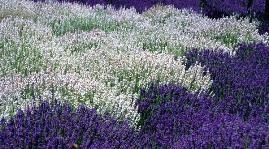
purple_white_lavender_269x149 At first I thought this was going to be an easy question, but once I got started, I realized — just ten!? I’ll give it a shot. Petitgrain sur fleur neroli because it embodies all the wonderful aromatic nuances of both petitgrain and neroli, and it just smells so delicious! It’s a perfume in its own right. Geranium absolute — this a recent discovery for me, and I realized while sniffing it that it has some of the notes of a fresh rose, those spicy and green notes that are missing from rose otto. Oakmoss because it reminds me of home. I grew up in the Sierra Nevada mountains, and oakmoss is a scent which is nearly constantly wafting through the air in the summer months. And for what it does to a perfume, exalting. There’s something very visceral about oakmoss. Lavenders because of their versatility. Because of that white lavender from Samara Botane, and a hand full of really extraordinary lavenders I received in a swap last year, I’ve completely rearranged my thinking regarding lavender. The scent profiles run the gamut from exquisitely floral to abrasively herbal. Patchouli because — well, because it’s patchouli! Earthy, warm, herby — dirty! Love it. Vetiver used to be something I couldn’t stand using (since mixing it once with cocoa absolute and a few other dark oils and getting something that smelled like it needed to be scraped off the bottom of a shoe) but now I love the stuff. Again, the scent spectrum for vetiver runs from floral Sri Lankan, woody smoky Bourbon, powdery sweet Haitian, to the bitter tobacco of the Indonesian. Roses — all of them. No explanation necessary. Bergamot because it’s so darned versatile. The floral notes of bergamot make it "work" with almost anything. Vanilla because it’s luscious and sweet and comforting. And tuberose. *Swoon*

How much do you rely on actual textbooks and how much of your teaching comes from personal experimentation?  If you could split these into percentages, how would this be reflected?
old_perfumery_books_225x202There is nothing I teach in the course that I haven’t actually done. I am definitely a hands-on  learner, so I may read on a subject to get the gist of how something works, but I do to get to the practical application — I do and do again until I get it right. Right now I’m experimenting with how to standardize tinctures and evulsions. I have all the necessary equipment and am conducting trials as to how to make them work. I will have to hit up a chemist or wine maker to mentor me through the process. I have a tacit rule of thumb in that I conduct stringent field trials and bench tests before ever including any of the date in the course curriculum.

Those who practice natural perfumery are beginning to shy away from traditional perfumery training. Is it because so much emphasis is put on synthetics, and what are the factors that have spurred those working with naturals to seek or create perfumery training that focuses exclusively on natural ingredients?
I don’t think perfumery, as an art form, can be quantified. The approach is as individual as the perfumer. As such, I think our course offers unique aspects as my personal experience, training and "touch".

Do you find that most of your students come with a previous experience, say in aromatherapy or other related business that deals with scents, or are they completely untrained with little odor recognition and simply like the idea from an intellectual standpoint?
They run the gamut. We have students from every color of the perfumery spectrum. There areJustine Crane197x221 laypersons, professionals, aromatherapists, aspiring perfumers — you name it. We strive to make our course one in which there is room for all. Everyone can feel comfortable, everyone can learn. We are apolitical. We support one another and everyone leaves the course richer than they started, with more knowledge and a larger network and community. Let me amend that — a lot of our students don’t leave. They stay on to mentor acolytes!

It has often been said that not everyone can become a ‘nose’, with the capability of discerning and identifying thousands of different scent molecules.  What stages of development do you think your perfume training gives a student in developing this ability, and what is your opinion about this somewhat limiting statement based on your experience working with developing a student’s abilities?
Again, like dance or painting, we have natural ability, and then we have training and hard work. What may appeal to you, say a Warhol, may not appeal to me, who likes Waterhouse. That’s what is so great about this medium, there’s room for everyone, and just when you think you’ve smelled it all, a fresh new talent, like rising stars Jill McKeever and Jaymie Smith, startles us all with something new and wonderful. There’s a scene in the movie "All That Jazz" where Joe Gideon tells Victoria, and I’m paraphrasing a bit, "I can’t make you a great dancer. I don’t even know if I can make you a good dancer. But if you hang in there, I know I can make you a better dancer." That’s us in a nutshell!

I’ve often felt that it takes time and certainly hard work to establish a vocabulary that intellectually describes the myriad senses, thoughts and feelings that come into play when working with aromatics.  What advice can you give to prospective students or even the layperson who wants to embark on understanding odors and articulate them well?
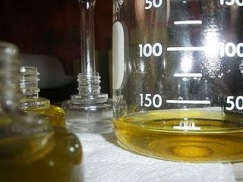
beaker_bottles_243x182 Smell consciously, and study and do. The first step to building a full aromatic vocabulary is to train oneself to smell consciously, every day, and write down whatever thoughts come through, no matter how strange they may be. Not everyone does this conscious smelling thing, but as a perfumer, I feel it’s extremely important to mentally acknowledge every scent and think about how the scent makes me feel.

Do you feel that you are somewhat limited in an online course study and that some aspects might be better understood in a classroom setting, and how do you overcome any barriers this might present?
I don’t feel there are any significant limitations in our online course. We provide the students with workbooks and evaluation and formulator’s kits, so everyone starts at the same place, and works at the same pace. Teaching locally limits our reach. We have students who live in Brazil, France, Canada, Norway, Australia, England, the US — there is no way that kind of international diversity could happen on a local level, especially for a course that spans a year of instruction.

You know that I, as a supplier, am very committed to insuring not only the sustainability of aromatics ingredients, but protecting the indigenous cultures who produce them.  What do you convey to your students along those lines? Do you exclude any aromatic ingredients for ecological reasons?  What are they and why?
I know this is going to sound odd, but I aspire to be like Gandhi: I am the change I want to see in the aromatic world. It goes without saying that I eschew such cruelly obtained ingredients as civet and musk; these, I feel, will only serve to infuse the resultant product with negativity. We teach our students the facts about civet and musk, ambergris and castoreum, sandalwood, oudh, rosewood and other oils on the verge of extinction, whether it’s about unethical or illegal use or unsustainable sources, and we allow the students to make their own decisions about these products. We do, however, attempt to show the students methods of creating alternative and sustainable botanical  profiles for the above mentioned oils.

What do you see for the future of natural perfumery?  What are some of the successes, and what obstacles are presented?  What community or networking efforts might be developed that continue to elevate this fine art?
JameelThis field of artistic expression is limitless. Just when I think I’ve seen it all, someone new  comes along with something astonishing to share. If you check in to LPR, you can keep abreast of many of the success stories in our field. There is no obstacle that cannot be overcome. It has been said of me that I walk softly and carry a big scent strip — I’m not an activist, I’m more of the mouse in the corner, quietly and diligently doing my own thing. If people like what they see — and smell — they’re welcome to join in. The soapbox is not for me, it’s not my style. I think that simply by the Zen of doing, we elevate the art form. As Natural Botanical Perfumers, I believe we must support each other, lift one another up. Geesh, we have enough to worry about with the coming FDA changes, and the IFRA breathing down everybody’s necks.
We are actively seeking Natural Botanical Perfumery students. Anyone interested is heartily encouraged to contact us for details on enrollment at www.naturalperfumeacademy.com. We guarantee learning in a warm, respectful, supportive environment, and as such are always looking to strengthen our ranks. We’ve filled the current course session which begins May 24th, but are beginning a new course in September 2010 with ten spaces available. We’re also adding four additional courses, two self-study and two correspondence. More information regarding those courses will be posted on the website some time in June 2010.  We added all these extra courses because this year we were inundated with requests for enrollment, but a lot of factors prevented students from gaining access to the May session.

                                                 ##############

This month’s Winged Seed Newsletter is out and features new Samara Botane/Nature Intelligence offerings and specials, as well as tidbits you might not know about carbohydrates and some thoughts on moving your body more.  Sign up here if you want to receive our newsletters.


image

When we reach the first of May, Earth has moved along its orbit to where the Northern Hemisphere is receiving an ever increasing flow of energy as each day is longer than the one before. The Sun is climbing in our sky, and everything in the Northern Hemisphere responds to its light. Indeed, we best be careful not to overdose on its luminosity that can burn and even cause cancerous effects that doctors warn about. We have reached the cross-quarter date that some past ages have considered to be the start of summer.

In Celtic tradition, the night of April 30 was thought of as the darkest of the year, when witches flew to frighten, spawning evil throughout the land. In response, people pounded on kettles, slammed doors, cracked whips, rang church bells and made all the noise they could to scare off the corruption they imagined to be moving on the moist air. They lit bonfires and torches and witch- proofed their houses with spring boughs. Such vigils were kept throughout the night until the rising of the May-dawn.

Beltane–the word means "brilliant fire" in reference to the Sun–became more commonly known as May Day. People danced around bonfires on hilltops, moving in a clockwise, or "sunwise" direction. Later generations would dance around a pole instead of a fire.

In the British Isles young men and maidens would go a-Maying on the eve of May Day, spending all night in the forests to return at day-break, "bringing in the May," adorning villages with spring boughs and blossoms. They might carry with them the stem of a tree, place it in the village, and decorate it with flowers, vines and ribbons. In later generations, people would dance around this phallic of the earth as participants in the fertility of crops, flocks, herds and humans. The celebration was for regeneration of life that comes with increased sunlight that is so noticeable when we reach the junction between vernal equinox and summer solstice.

Maypoles remain common in Scandinavian countries, and the trimmings are often left through summer and winter as a gesture to symbolically insure the coming of spring the following year. The meanings of the day have continued to change. In 1887, socialistic countries established May 1 as a day for working people to show unity in public demonstrations. In communist Russia, the day became one of political speeches and military parades. It is difficult to imagine drifting much farther from the origins of the occasion of reaching the point in our annual travels around our star when we feel the urge to celebrate the increase of starlight that falls upon our portion of ground to amplify the symphony of life around us. Maypoles seem so much more appropriate than do missiles aimed at the sky.

It is, after all, the location of Earth in its solar orbit that we celebrate on any anniversary. Your birthday, Independence Day, Christmas and all the others that are date specific are established by Earth’s orbit and are marked by reference to the Sun in our sky. If you wish, you could mark these days by knowing where the Sun would rise as viewed from some specific observing station. Your horizon calendar would be defined by the limiting northern and southern gateways for sunrise or sunset at summer and winter solstices. The equinox would mark the mid-point, and the cross-quarter dates could provide additional reference points for visualization of the passage of the year. You could add your own personal anniversaries that you wish to celebrate with the entrance and exit of the Sun on those particular days.

Native Americans occupying this land before us were watching the Sun migrate on the horizon. When it reached the place we have named "May" they were singing the songs that brought them into harmony with the fertility of Mother Earth and Father Sky. Their rewards were gentle rains, mixed with sunlight. Successively, as the Sun reached established "houses" on their horizons, they placed seeds in the soil: several plantings to assure good crops.

Calendar keeping people also watch the stars. In early May the evening sky in the west is marked by an arc of brilliant stars. Sirius in Canis Major, brightest star of the night is low to the southwest, setting in the dusk. Higher and a bit farther north is Procyon in Canis Minor. Then we come to the bright pair, Castor and Pollux, the Twins of Gemini. Still farther north is yellow-cast Capella in Auriga. Capella being the last of the group to set gives its name to this star- lit arch–"Arc of Capella."

Underneath the arch, vanishing from the evening sky, are famous winter stars. As May comes in, the Pleiades, a tightly-clustered group in the constellation Taurus, vanishes in the evening twilight, and mighty Orion follows them. Both groups have long been used for agriculture. The Navajo people refer to the Pleiades as Dilyehe’. "Never let Dilyehe’ see you plant," they say. Once the Pleiades are gone from the evening it is time to begin planting in Navajoland, and crops must be started before Dilyehe’ is back in the early morning sky before the dawn.

The cross-quarter day that is only vaguely remembered these days in the form of May Day certainly signals the onset of the most pleasant of times in our part of the world. Leaves are bursting out on trees, flowers in all the colors of the rainbow appear on deserts and make their way into the mountains. Farmers work fields and backyard-gardeners plant vegetables and herbs. This is a good time to look around at earth and sky with greater sensitivity and appreciation of emerging abundance that initiates the harvest we will surely enjoy in a few short months.

This article was modified from the original Von del Chamberlain to serve as an information source for all May Day cross-quarter events.


I don’t know about you, but this year’s Earth Day leaves me bereft,  feeling somewhathot-earth225x225 frustrated and depressed that I am not doing enough and that we, collectively, are still in denial about the human impact on climate change and resultant planet degradation. Those of us not still in denial who live in the so-called “developed” countries appear to be apathetically slow to make meaningful ecological choices, and we are too easily influenced by “pseudo-greening” or “green-washing” that is meant to deceive the actual reality of continuing to practice a destructive status quo. Based on evidence, it appears that we continue to create problems, not solve them, in spite of all those good intentions we project (or lie about, in some cases). Let’s look at a few facts that confront us. 

According to IPCC, farmers who practice rain-fed agriculture could see a 50 percent reduction in yield in the coming decade. This has led to coining the term, “food insecurity”, which itself seems too gentle a term for the reality of mass starvation.  Rain-fed agriculture is a major source of food and fiber. About 60% of world staple food production relies on rain-fed agriculture. Rainfall is also responsible for meat production through grazing and for wood from the forest. In Tanzania and other Sub-Saharan African countries where irrigation is very limited, almost all food and most cash crops such as cotton, tobacco and wood depend on rainfall (Rockström, 2000). It is a fact that the talks at Copenhagen failed miserably and that the powerful shut out the voices of the not-so-powerful. The rich technocrats (Bill Gates, Richard Branson, etc.) would have us believe that climate engineering is a simple solution to solve the problem, in spite of the many reluctant scientists and engineers who cautiously report in any one of the 209,000 papers found here on the Google.

These statistics alone should be alarming enough to spur us to action for a reversal of harmful practices like CO2 emissions, but layers of other negative influences complicate our possible actions.  Influences that many of us feel powerless to stop.

man_eating_earth226x211 The concept of (self regulated) corporate social responsibility that emerged in the 70’s, with no actual watchdog over emerging multi-national corporations is widely debated, with proponents advocating that corporations benefit in multiple ways by operating with a perspective broader and longer than their own immediate, short-term profits. Critics argue that CSR distracts from the fundamental economic role of businesses; others argue that it is nothing more than superficial window-dressing; others yet argue that it is an attempt to pre-empt the role of governments as a watchdog over powerful multinational corporations (Wikipedia).  The Organization for Economic Cooperation and Development’s (OCED) Guidelines for Multinational Enterprises are the only corporate responsibility instrument formally adopted by state governments. This critical analysis from 2008 gives us more detail about the limitations of developing countries to monitor or regulate foreign corporations, and  there has been little conclusive evidence that these corporate investments do promote growth and employment in developing countries. Human rights are neglected or abused, ecosystems are disrupted, completely wiping out indigenous people’s livelihood in some instances.

This week, Senators John Kerry, Joseph Lieberman and Lindsey Graham plan to introduce a climate bill that will eliminate the EPA’s authority under the Clean Air Act to regulate greenhouse gas emissions.  “First of all, one of the conditions of the bill we’re hearing is that it will eliminate the EPA authority under the Clean Air Act to regulate greenhouse gas emissions, which is a slap in the face to everything that Earth Day stands for . . . Secondly, it will include cap-and-trade provisions between utilities, so you could have a nuclear power company trading with a coal power company, but if it’s too expensive for them to meet their emissions targets, they could buy offsets . . . and, unanimously, all of the statements that are coming out of the different working groups here at the Bolivian Climate Conference are condemning carbon markets.”, Activist Daphne Wysham, a fellow at the Institute for Policy Studies in Washington, DC, and co-director of the Sustainable Energy and Economy Network reported today.

The interconnected complexity of all this seems overwhelming.  Can I, and others like me,    Healing_Mother revive and cultivate optimism and actually take meaningful action, especially when our government and major corporations seem to be dragging their feet or acting against our greater interests in this regard?  In spite of the powerful country-corporate refusal to listen, there are thoughts and ideas coming out of Bolivia this week for us to contemplate. 

A key initiative to come out of the Bolivia Climate Conference is a Universal Declaration of the Rights of Mother Earth. The key points here encourage me and hopeful that after this long discourse intended to move you to gather more information to support alternative solutions, you still have the time and inclination to contemplate them yourself.

Happy Earth Day,
Marcia

P.S. I have to give great thanks to Amy Goodman and Democracy Now, who I share my breakfast with every weekday morning for at least a decade now.  I also weep with sadness for us all that the great Bill Moyers Journal, another great source for my social, environmental and economic chops, will be leaving PBS. I am encouraged to know that Bill Moyers Blog will continue to be carried online by PBS, at least for now.  Nobody is saying the reasons for his retirement out loud, but I suspect the more conservative Board at PBS is a factor, especially when we see no progressive replacement. 


easter-egg-dyeing_242x158 Long before there was Easter, the egg was regarded as a symbol of new life and the advent of spring.  The decoration of eggs became an art form centuries ago and continues today as a delightful craft and enjoyable children’s activity as a precursor to the “hunt” for eggs and candy, enjoyed by children around the world.  Some of the historical techniques for coloring or decorating eggs include:

Etching:  This technique can be traced back to Macedonia and involves first dying the egg, applying a layer of wax in design, then bleaching off the color leaving only the wax-covered areas with color.
Krashanky:  This is one of the traditions coming out of the Ukraine and the word means ‘color’.  Krashanky eggs are dyed a solid, brilliant color, often red to symbolize the blood shed by Christ on the cross. 
Eggs_Pysanky2_248x225 Pysanky:  If you have never seen a Pysanky egg, you are missing a beautiful artistic craft.  I was gifted one at the World’s Fair in 1972 by one of our participants and it graced the windowsill in my kitchen for many years before it eventually cracked and had to be thrown away.  The term Pysanky means to write.  Intricate designs are drawn in wax on the eggs, a process similar to batik.  The eggs are then dyed many colors.  There are many regional designs and color selections around the various regions of the Ukraine. 
Egg_Original_Faberge Eggs Gold_207x238 Fabergé:  Undoubtedly the most famous and expensive decorated eggs known are those created by the Russian jeweler Peter Carl Fabergé in the 1800’s.  Made of gold, silver and jewels and opening up to reveal tiny figures of people, animals, plants or buildings, a total of 57 eggs were made.  They are now artifacts in museums across the world. The picture at left is the very first one made.  A glimpse into a stunning Fabergé exhibit in 2001 can be viewed here.

Binsegraas:  This Pennsylvania Dutch tradition is not widely practiced today, but involved wrapping the pith of binsegraas (a type of rush) in coils glued to eggs.  Then interesting shapes of calico cloth were pasted on the egg.  The Polish people have a similar tradition, using yarn formed into elaborate coils.

There are other forms of egg decorating that include gluing sequins, beads, flowers and bits of decoration onto blown eggs.  Blown eggs are also used for a cut-out diorama of a little scene viewed through the cut-out section.  In pioneer days, eggs were wrapped in calico or madras cloth, then boiled so the water released the dyes into the shells.  Since most fabric is colorfast, you will rarely see this today.

My favorite activity around the approach of Easter is to gather natural materials and ingredients to make colored Easter eggs with leaf and flower imprints.  This is a favorite tradition started when my girls were little and now carried on with the grandchildren.

Here are materials to gather to make the natural dye, arranged by color they will produce in final dyed egg:
Brown and tan:  Outer layers of onions, black/green tea, coffee, black walnut hulls
Yellow:  Tumeric, cumin, saffron, lemon rinds
Orange:  Paprika, chili powder, carrots
Red:  Fresh cranberries, cherries, raspberries, Spanish onion skins
Purple and blue: Blueberries, boiled red cabbage leaves, beets
Green: Spinach
Grey or slightly lavender:  Hibiscus flowers

Combine the dye source with 1 Tablespoon vinegar and cold water in a saucepan.  There are two different methods.  You can boil the eggs and dyes separately, strain the dye and add hard-boiled eggs in the shell to the hot liquid and let it soak until it reaches the desired hue.  Or, you can wrap uncooked eggs and cook them in the dye as they are being colored.  With the former method, if the eggs need to soak for more than 2 hours to reach the desired deepness of color, you may want to move them to the refrigerator if you will be eating them. Generally, however, natural dyes are going to create more earth-like subdued colors.

Here are the things you want to have on hand:
Botanicals2_298x230 Fresh herb, plant and flower cuttings.  The smaller the better, however, wrapping a large fern that covers an entire egg is a stunning design when finished.  Thinner, flat items are easiest to secure tightly.  Use your imagination. Dandelion flowers will impart a bright yellow splotch in the finished egg, adding a whimsical touch.  Other fresh botanicals will add a bit of their own color, along with imprinted texture and form.  It’s fun to let the process itself randomly influence the outcome.  Children love to do this; it’s biochemistry and art all in one . . . plus you get beautiful eggs to add Eggs_Natural1_238x235jpgto the Easter hunt or to share.
Pantyhose or cheesecloth, cut in squares that can be tied with wire or rubber bands to snugly keep plant material in place.  If re-using nylon squares or cheesecloth, be sure to rinse between eggs.  You’ll want a slotted spoon to turn and remove the eggs while they are in the dye bath, and you’ll want a couple of brown paper bags cut and laid flat to place eggs on to dry. 

Here are some tips:  Older eggs work best, buy them at least a week before boiling as newer eggs are hard to peel.  I think white eggs take the natural dyes better, plus you can create additional designs with wax to add bright white to the creation before putting on leaves and flowers. Shine up Eggs_botanical_Easter1_209x253 finished eggs when they are dry with a little olive oil rubbed in.  Eat those eggs!  Don’t waste them – make deviled eggs, egg salad or use in a salad.  Be sure to keep them refrigerated if you will be eating them.  Most of all, have fun, and encourage your children to experiment; you’ll learn new ideas from them.  If you do this project this year, send useaster_eggs_onion_skin_201x208 pictures of your creations attached as a .jpg in an email: samara@wingedseed.com, including your current mailing  address and we’ll send an aromatic surprise back.

Happy Easter and Spring!


skin_micro_180 In Leonardo’s time, scientists of his caliber rarely considered the skin to be anything more than a decorative covering, necessitating removal to study the more fascinating parts underneath.  Today, most of us know that our skin is our largest organ and serves as armor to protect all those precious inner parts.  To the naked eye, the skin doesn’t appear to be complex or interesting, and before the invention of the microscope in the 17th century we really didn’t understand how it works.

Now, we can see how intricate the skin actually is, along with the vital role it plays.  The epidermis (outer layer of skin) continually produces new cells to renew itself, while shedding outer cells as they die off and shed.  You might not know that much of the dust in a room is actually tiny fragments of human skin.  As much as thirty to forty thousand skin cells fall unseen from your body every minute. continually replaced by vibrant new cells rising to the surface. We might call this renewal system your “skinecosystem”.  Hah. Say that 10 times real fast.

The skin is also the body’s heaviest organ, weighing from 9 to 15 pounds in a healthy adult, usually around one-twelfth of your total body weight.  It’s primary function is to protect all those well-functioning inner parts from damage or harm.  Looking more closely through our microscope, you will see a subcutaneous fat layer just under the outer skin (dermis) that works like padding in a quilt to keep your body warm and absorb knocks and bumps.  The skin is so tough because skin cells contain the protein keratin, more prevalent in fingernails and toenails and less prevalent in softer skin such as that under arms.  Microscopically, you can also see those dead, flattened cells that interlock and overlap tightly packing together, making skin an excellent germ barrier. Your skin produces natural oils and waxes from the tiny sebaceous glands that keep the skin flexible and supple.  These waxes also contain the body’s own germ-killing chemicals, acting as disinfectants against harmful microscopic organisms.  Another important function of the skin is the production of Vitamin D when exposed to sunshine, a very important nutrient for a healthy immune system. It is also your body’s radiator, producing perspiration over the skin surface when necessary to cool you when your body overheats.  Overall, the skin is a pretty important organ and well worth taking care of.

Skin Permeability:

The epidermis’ outermost layer is called the stratum corneum, and is important for allergy and sensitivity.  The SC is comprised of a network of cells on the surface that provides immediate protection from the outside world and helps restrict loss of water.  This outermost layer requires lipids (fats) to form a healthy cutaneous barrier.  Combined with the dying cells that compact and form a sort of “cement”, healthy skin does a good job of providing a sturdy barrier.  However, when there is disruption in the number and compactness of the intercellular lipids, the skin barrier can become more permeable. This disruption can explain how some toxins might seep through SC cells, enter the tiny blood vessels in the dermis and subcutaneous fatty tissue and possibly spark an antibody-mediated reaction.  This explains why some people do not suffer with allergic contact dermatitis when exposed to poisonous plants. Their skin barrier is intact and able to effectively protect the body from the toxin.  Atopic dermatitis can also be sparked by numerous allergens, inhaled, ingested and contacted substances.  Some foods (especially eggs) or inhalants (dust mites and cat dander) have been established as being the most common allergens.

Causes of Skin Barrier Damage:

 
Essential fatty Acid Deficiency: 

Usually most Americans have adequate supplies of cholesterol or ceramides for the skin, both from dietary sources and internal metabolism, but they may not get enough polyunsaturated fatty acids (essential fatty acids, EFAs) that are only available through diet. The skin barrier requires an abundance of omega-6 essential fatty acids.

There are two primary types of omega-6 EFAs, linoleic acid and arachidonic acid, both of which are only found in foods. Linoleic acid is found in the oils of safflower, sunflower, corn, soy, and sesame. An enzyme is responsible for converting linoleic acid into gamma-linolenic acid (GLA), a fatty acid that is needed to complete the skin surface lipid structure. GLA is found naturally in evening primrose oil, black currant oil, and borage oil.

Changes in Humidity:

rain_200 Exposure to humidity changes seems to cause an increase turnover rate of skin cells, which exhausts the oils in the skin barrier and exacerbates inflammatory skin conditions such as atopic dermatitis and psoriasis.

Dehydration:

Many of us know that we need to drink lots of water.  You may not know, however, how important it is for healthy skin. The surface skin is thicker than the interior tissues of the body. Circulation comes to the base of the skin, and the water has to seep upwards through all the strata of the skin to reach the outer layer. The exposed surface of the skin is also constantly losing water due to environmental factors such as sun, wind, and chemicals, to name a few. When the body itself is dehydrated, circulation to the base of the outer skin may be shut down as an emergency measure so that water is not lost through evaporation from the skin’s surface. Chronic dehydration shows in the face with wrinkles, lines and furrows. It’s best to drink filtered water. There are many quality filtration systems on the market.

Ultraviolet Radiation:

sunshine_220 We know that both types of UV rays, UVA and UVB, can lead to skin cancer and eye problems if left unprotected from the harsh radiation. What most people don’t realize is that UV radiation also increases skin permeability and can be a significant factor in sensitization. Studies have shown that skin lipid synthesis significantly declines 72 hours after UVB exposure but recovered after 96 hours, suggesting that UVB-induced barrier damage may not be permanent.  Wait a minute, you may say, you just told me that the skin needed sunshine to produce vitamin D, important for the immune system.  How many of you have a tendency to overdo when you do get out in the sun?  This is where the most damage occurs.  It is a fact that rates of skin cancer are typically higher in areas of the body that are generally kept covered and only exposed during sun bathing.  Regular, consistent, small amounts of exposure to the sun (without burning) has a protective effect on the skin, increases vitamin D, can improve mood, help with depression and myriad other benefits.  Rule of thumb is that a very fair-skinned person with northern heritage should only get 10-15 minutes of sun exposure over the majority of the body during peak hours.  Someone with darker skin and a heritage that originated closer to the equator should be able to get longer exposure without doing more harm than good.  So, moderate sun exposure can actually help reduce the potential for cancer risk.  It is difficult to get all the necessary vitamin D from dietary sources. So make sure you get moderate sun and avoid over-exposure, especially during peak sunshine hours.

We’ll cover more about  skin and its care in future blogs.

IN THE SAMARA SPA

You’ll find about forty-five natural Samara Botane formulated skincare products, including our Healthy Skin Hydrosol, Facial Massage Oil, several Herbal Steams, unscented and wonderfully scented lotions in single notes and blends, our fabulous Rosewater Crème and Rose Luxurious Lip Balm (made with real rose otto and absolute).  Just click here.  Superior cleansing with our carefully crafted handmade soaps (bars and liquid) can be found here.

© 2008-2009 Marcia Elston Suffusion theme by Sayontan Sinha